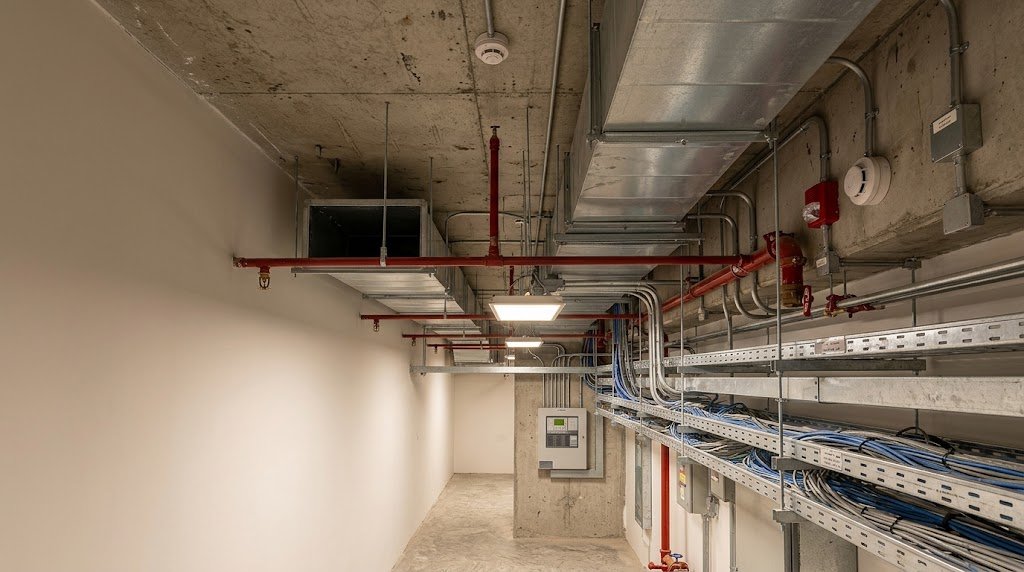
Saudi Civil Defense requirements for buildings and facilities in 2026 are not limited to one fire alarm panel, a few extinguishers, or a fire pump room. For most projects, readiness depends on a complete safety setup: fire alarm systems, fire fighting networks, pump rooms, emergency exits, evacuation routes, emergency lighting, technical documents, testing records, maintenance contracts, and site operation readiness. This guide gives project owners, contractors, consultants, and facility teams a practical way to understand what should be reviewed before designing, supplying, installing, maintaining, or preparing fire and safety systems for Civil Defense review in Saudi Arabia.
This article is a practical guide, not a replacement for official Saudi Civil Defense regulations, Saudi Building Code requirements, project consultant comments, or the final authority review. Requirements may change according to project type, building use, activity risk, area, height, occupancy, city, and official comments.
- 01 - What Saudi Civil Defense requirements mean in practice
- 02 - Why requirements change by building type
- 03 - Fire alarm system requirements to review
- 04 - Fire fighting systems and water-based protection
- 05 - Fire pump room readiness
- 06 - FM200, clean agent, foam, kitchen hood, and special systems
- 07 - Emergency exits, escape routes, and emergency lighting
- 08 - CCTV, access control, and low current systems
- 09 - Maintenance contracts and inspection records
- 10 - Documents usually needed before review or inspection
- 11 - Common issues that delay Civil Defense readiness
- 12 - How to plan Civil Defense readiness by project stage
- 13 - Names and brands you may see while searching
- 14 - How Azeidk supports fire and safety readiness
- 15 - Final checklist for building and facility readiness
What Saudi Civil Defense requirements mean in practice
In real projects, Saudi Civil Defense requirements are not only about “having fire systems”. The real question is whether the building is safe, whether the installed systems match the project activity, whether the systems can be tested, and whether the site can be operated and maintained after handover.
For owners and contractors, this means safety should be planned as one connected system. Fire alarm, fire fighting, pumps, exits, emergency lighting, special suppression, CCTV, access routes, maintenance, and documentation should work together. A site may have good products but still face problems if the installation, labels, testing records, or access routes are not ready.
A practical Civil Defense readiness plan should answer these questions:
- What is the building activity and risk level?
- Which fire and safety systems are required for this project type?
- Are the installed products suitable for the site and supported with documents?
- Can the fire alarm and fire fighting systems be tested clearly?
- Are fire pump room readings, valves, and controllers ready?
- Are emergency exits, signs, and lighting clear?
- Are maintenance records available for existing facilities?
- Is the site prepared for operation, not only inspection?
This is why Civil Defense readiness should start early in the project, not a few days before inspection.
Why requirements change by building type
A warehouse is not reviewed in the same way as a restaurant, a school, a factory, a hospital, a commercial building, or a residential tower. The building activity changes the risk profile, and the risk profile changes the safety systems that should be reviewed.
Commercial buildings
Commercial buildings usually need clear fire alarm coverage, safe evacuation paths, visible emergency signs, accessible extinguishers, fire fighting systems where required, and a maintenance plan that keeps the site ready during operation.
Warehouses and logistics facilities
Warehouses need special attention because storage height, rack layout, stored materials, loading docks, and vehicle movement can change the fire risk. Fire fighting coverage, valve access, hose cabinets, extinguishers, alarm notification, and maintenance access should be reviewed carefully.
For more details on this topic, Azeidk has a dedicated guide about Fire System Installation Mistakes in Warehouses and Factories.
Factories and industrial facilities
Factories can include production lines, heat sources, electrical rooms, raw materials, packaging areas, and machinery. These areas may require different safety considerations within the same facility. Fire alarm device selection, detector placement, fire fighting coverage, and emergency response planning should reflect the actual process inside the site.
Restaurants and commercial kitchens
Kitchens may require special suppression systems for cooking equipment and extraction hoods. Fire risk in these areas is different from normal office or retail spaces, so kitchen hood suppression, shutoff interfaces, extinguishers, and maintenance records should be reviewed.
Hospitals, schools, and high-occupancy buildings
These buildings need extra attention because evacuation can be more complex. Alarm notification, emergency lighting, exits, signage, staff response, fire compartments, and maintenance records should be easy to understand and follow.
The main point is simple: do not copy one fire safety solution from one project to another. The correct solution starts with understanding the building activity.
Fire alarm system requirements to review
Fire alarm systems are often the first system reviewed because they detect early signs of risk and alert people inside the building. A fire alarm system should not only be powered on; it should be correctly designed, clearly labeled, tested, and easy for the operation team to understand.
Fire alarm control panel
The panel should be accessible, readable, and free from unresolved major faults. Device names, zones, and system messages should be clear enough for the site team to understand what is happening during an alarm or fault.
Detectors and manual call points
Smoke detectors, heat detectors, beam detectors, manual call points, and modules should be selected and placed according to the site conditions. Dust, airflow, ceiling height, heat sources, and equipment layout can all affect performance.
Sounders, strobes, and notification devices
Notification devices should be visible and audible where people work or move. In noisy industrial areas, warehouses, or loading zones, alarm notification needs careful review.
System interfaces
Fire alarm systems may need to interface with elevators, HVAC, doors, smoke control, fire suppression systems, or emergency controls. These interfaces should be tested before handover.
Choosing between conventional and addressable systems depends on project size, complexity, and the need to identify the exact alarm location. You can read Azeidk’s detailed article: Fire Alarm Systems in Saudi Arabia: Conventional vs Addressable.
Fire fighting systems and water-based protection
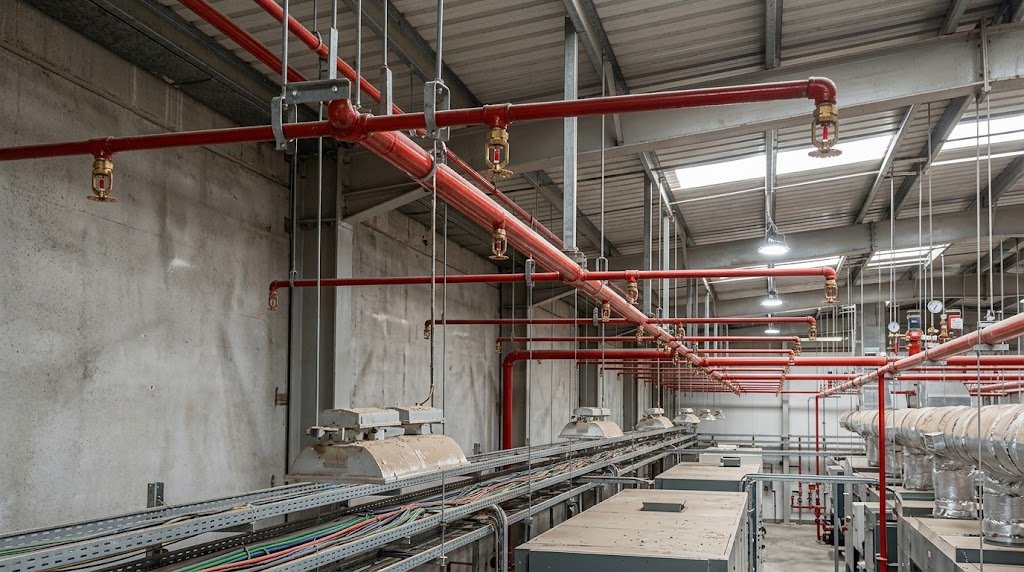
Fire fighting systems should be reviewed as a full network, not as separate pieces. Sprinklers, pipes, valves, hose cabinets, tanks, pumps, and testing points all affect system performance.
Sprinkler systems
Sprinkler coverage should match the actual layout, ceiling conditions, obstruction level, and hazard type. In warehouses, storage height and rack layout are especially important.
Fire hose cabinets
Fire hose cabinets should be accessible, visible, and not blocked by furniture, pallets, partitions, or stored goods. Hose condition and cabinet readiness should be included in the maintenance review.
Valves and gauges
Main valves and zone valves should be easy to reach and clearly identified. Gauge readings should be readable, and the site team should understand the normal operating condition.
Fire extinguishers
Fire extinguishers should be selected according to the risk type, distributed properly, accessible, visible, and checked for pressure, inspection date, hose condition, and general usability.
One of the biggest mistakes in fire fighting projects is choosing a system based only on product availability or price. The system must match the project activity, hazard level, building layout, and future maintenance needs. Azeidk covers this topic in detail here: Choosing the Right Fire Fighting System for Your Project.
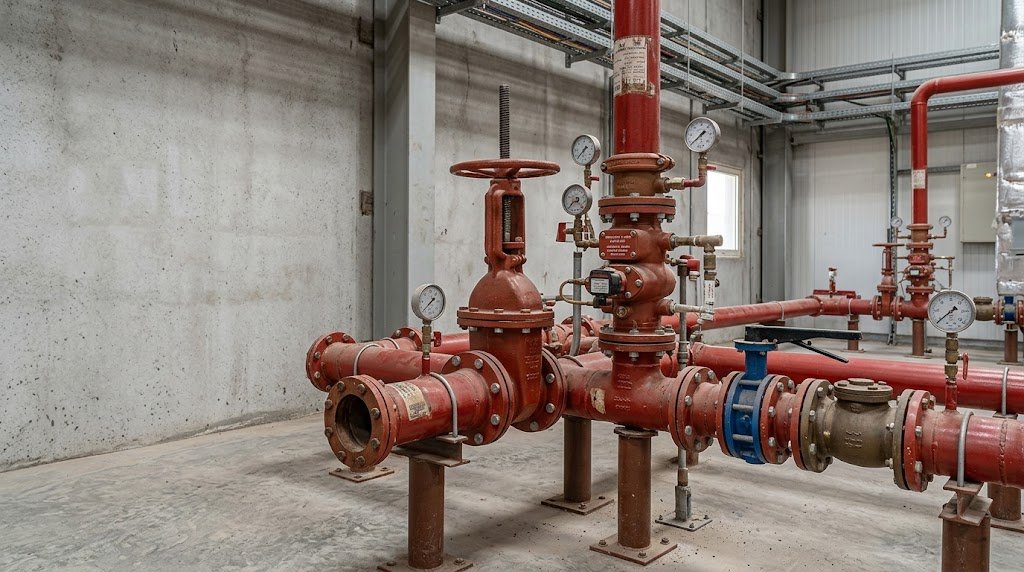
Fire pump room readiness
The fire pump room is one of the most important parts of the fire fighting system. If the pump room is not ready, the network may not perform correctly during testing or emergency conditions.
What should be checked?
- Main fire pump readiness
- Jockey pump behavior
- Controller status and alarms
- Suction and discharge valve positions
- Pressure readings
- Drainage during testing
- Ventilation and access
- Testing records and operation notes
Pump rooms should not be treated as “mechanical rooms only”. They are part of the full safety system, and their condition affects building readiness. For a focused checklist, read: Fire Pump Room Checklist Before Handover.
FM200, clean agent, foam, kitchen hood, and special systems
Some areas need more than standard water-based fire fighting systems. Server rooms, electrical rooms, data centers, commercial kitchens, fuel-related areas, and some industrial risks may require special suppression systems.
Clean agent and FM200 systems
Clean agent systems are commonly used in areas where water damage could affect sensitive equipment. These systems require proper room integrity review, cylinder condition, detection logic, control panel readiness, release sequence, warning devices, and maintenance records.
Foam systems
Foam systems may be used in specific fire risks where foam application is needed. The system should be reviewed based on the risk type, foam concentration, equipment condition, testing approach, and required documentation.
Kitchen hood fire suppression
Commercial kitchens need careful review because grease, heat, extraction hoods, and cooking equipment create a different risk profile. The suppression system, nozzles, cylinders, manual release, shutoff interface, and maintenance schedule should be checked.
Smoke control and emergency systems
Some buildings require smoke control, stair pressurization, emergency lighting, or other safety interfaces. These systems should be tested as part of the building’s full emergency scenario, not separately.
Special systems usually need clear documentation and qualified technical handling. Small mistakes in design, installation, or maintenance can create major issues later.
Emergency exits, escape routes, and emergency lighting
Fire safety is not only about detecting or fighting fire. People must also be able to leave the building safely. Emergency exits, escape routes, signs, and lighting are part of the safety picture.
Emergency exits
Exits should be visible, accessible, and not blocked. Doors should support evacuation requirements and should not be restricted by storage, temporary work materials, or poor site arrangement.
Escape routes
Corridors, stairs, exit paths, and assembly routes should be clear. In active buildings, blocked routes are a common issue, especially in warehouses, retail areas, back-of-house spaces, and service corridors.
Emergency lighting and exit signs
Emergency lights and exit signs should be visible and functional. Battery condition, placement, and visibility should be reviewed regularly, especially before inspection or handover.
A strong fire alarm system loses value if people cannot move safely after the alarm. This is why evacuation readiness should be checked along with system testing.
CCTV, access control, and low current systems
CCTV and low current systems are not always treated as part of Civil Defense fire protection requirements, but they often support building safety, security, operation, and incident review. Many commercial, industrial, and logistics projects need CCTV, access control, intercom, and monitoring systems alongside fire and MEP systems.
CCTV coverage
Cameras should not be placed only to “cover the area”. A good layout should consider entrances, exits, loading docks, storage aisles, cash or reception points, vehicle movement, and blind spots.
Read more in Azeidk’s article: CCTV Coverage for Warehouses and Factories.
Access control
Access control helps manage movement in sensitive areas such as server rooms, control rooms, pump rooms, warehouses, electrical rooms, and administration areas.
Low current coordination
Low current systems should be coordinated with fire alarm, electrical, and architectural works. Poor coordination can create delays, duplicated work, or weak coverage after handover.
For Azeidk, this is important because many clients do not need fire systems only. They need a full safety and technical setup that supports daily operation.
Maintenance contracts and inspection records
A building is not ready just because systems were installed once. Fire and safety systems need periodic testing, clear records, fault follow-up, and corrective actions. This is especially important for existing facilities, warehouses, factories, malls, hotels, schools, hospitals, and administrative buildings.
What maintenance should cover
- Fire alarm panel and batteries
- Detectors, manual call points, sounders, and strobes
- Fire pumps, jockey pump, valves, and gauges
- Sprinklers and hose cabinets
- Fire extinguishers
- Special suppression systems if applicable
- Emergency lighting and signs
- Technical notes and corrective actions
Why records matter
Maintenance records show what was inspected, what faults were found, what was corrected, and what still needs follow-up. Without records, site teams may lose track of repeated issues.
If you are reviewing or signing a maintenance agreement, read: Fire System Maintenance Contracts in Saudi Arabia.
If your site already has systems but maintenance is being delayed, read: Maintenance Risk in Fire and Safety Systems.
Documents usually needed before review or inspection
Documentation is one of the areas that can delay projects even when the installation work is acceptable. The project team should keep technical documents organized throughout the project, not only at the final stage.
Common document categories include:
- Approved drawings or latest project drawings
- Fire alarm layouts
- Fire fighting layouts
- Pump room drawings and equipment details
- Product data sheets
- Product certificates and approvals where required
- Testing and commissioning reports
- Maintenance reports
- Fire pump test records
- Valve list and zone details
- Special system documents
- Consultant comments and corrective action records
Good documentation saves time because it helps the owner, consultant, contractor, and technical team understand the exact condition of the site.
Common issues that delay Civil Defense readiness
Many delays come from small items that were not reviewed early enough. The following issues appear often in fire and safety projects:
Unresolved fire alarm faults
Battery faults, disabled devices, repeated alarms, unclear labels, and communication faults can affect readiness.
Blocked access
Fire hose cabinets, extinguishers, panels, valves, pump rooms, and emergency exits must not be blocked by storage, furniture, temporary materials, or equipment.
Unclear valve status
Valves should be labeled and easy to identify. During testing or emergency response, the team should know which valve controls which zone.
Weak testing records
Testing may have been done, but without a clear record, the project team may struggle to prove system readiness.
Late coordination between teams
Fire alarm, fire fighting, electrical, HVAC, low current, and architectural teams should coordinate early. Late coordination can create rework and delays.
Azeidk has a dedicated guide about practical pre-inspection readiness: Civil Defense Fire Safety Approval in Saudi Arabia.
How to plan Civil Defense readiness by project stage
Civil Defense readiness becomes easier when it is planned across the project lifecycle. Waiting until the final inspection stage usually creates pressure and last-minute corrections.
Design stage
- Review building activity and risk profile
- Coordinate fire alarm, fire fighting, HVAC, electrical, and low current routes
- Check pump room location and access
- Plan emergency exits and safety signs
- Prepare technical submissions early
Supply stage
- Confirm product suitability
- Check required certificates and data sheets
- Review spare parts availability
- Confirm delivery schedule with project timeline
- Avoid product changes without technical review
Installation stage
- Compare drawings with actual site conditions
- Check detector, sprinkler, valve, and cabinet locations
- Keep equipment accessible
- Label devices and zones clearly
- Document changes during execution
Testing and handover stage
- Test systems as one connected setup
- Prepare testing and commissioning reports
- Train or brief the operation team
- Close consultant comments
- Prepare maintenance plan and records
Names and brands you may see while searching
When searching for fire safety companies, Civil Defense readiness support, fire fighting equipment, or maintenance services in Saudi Arabia, you may come across company names and product brands such as NAFFCO, SFFECO, Al-Jehani, Nokhbat Al-Etfaa, Basmat Khibra, Building Technologies, Al-Rowad, Future Mechanics, TYCO, Victaulic, Potter, Hochiki, Apollo, Notifier, Siemens, Bosch, Context Plus, AFC, and Falcon Gold.
Seeing many names in the market is normal. The right decision should not depend on name recognition alone. What matters is whether the company understands the project, selects the right system, provides clear documents, installs correctly, tests properly, and supports maintenance after handover.
How Azeidk supports fire and safety readiness
Azeidk supports projects and facilities across Saudi Arabia through fire protection, fire alarm, fire fighting, suppression systems, CCTV, low current, MEP coordination, and maintenance services. The goal is to help clients prepare systems that are practical, testable, documented, and easier to maintain.
Azeidk can support projects through:
- Studying project requirements before system selection
- Supplying fire alarm, fire fighting, and safety system products
- Supporting installation, testing, and commissioning work
- Reviewing fire pump room readiness
- Supporting special systems such as clean agent, kitchen hood, and foam where required
- Providing maintenance contracts for fire and safety systems
- Preparing technical reports and follow-up notes
- Supporting CCTV, access control, and low current needs
- Helping facility teams prepare for inspection, handover, and operation
The practical value is not only in supplying products. The value is in connecting design, supply, installation, testing, documentation, and maintenance in one clear workflow.
Final checklist for building and facility readiness
Use this checklist as a practical starting point before reviewing fire and safety readiness for a building or facility in Saudi Arabia:
- The building activity and risk profile are clearly understood
- Fire alarm system is installed, labeled, and tested
- Fire alarm panel is free from major unresolved faults
- Detectors, manual call points, sounders, and strobes are reviewed
- Fire fighting network is accessible and ready for testing
- Fire pump room readings, controllers, valves, and drainage are checked
- Fire extinguishers and hose cabinets are visible and accessible
- Special systems are tested and documented where applicable
- Emergency exits, escape routes, signs, and emergency lighting are clear
- CCTV and low current systems are coordinated where required
- Technical documents, data sheets, and drawings are organized
- Testing and commissioning reports are prepared
- Maintenance records and contracts are clear
- Consultant comments are reviewed and closed where possible
- The owner, contractor, consultant, and maintenance team know their responsibilities
- The site is clean, accessible, and ready for practical system review