NAQUA is one of the most important names in Saudi Arabia’s aquaculture and seafood sector. Its work is not only about producing shrimp and fish at scale; it is also about managing a sensitive operational chain that depends on quality, cold storage, logistics, food safety, and facility readiness. As the seafood industry grows in Saudi Arabia, fire alarm systems, fire protection systems, extinguishers, and maintenance become part of protecting the full operation, not just technical items installed at the end of a project.
This article looks at why fire and safety systems matter in seafood warehouses, cold storage environments, and food logistics facilities, using NAQUA as a relevant example of a high-value operating environment where safety, continuity, and response readiness are closely connected.
- 01 - NAQUA and the role of aquaculture in Saudi Arabia
- 02 - Why seafood warehouses need a different safety approach
- 03 - Fire risks inside fish and shrimp storage facilities
- 04 - The role of fire alarm systems in food warehouses
- 05 - Fire protection systems and extinguishers inside warehouses
- 06 - Protecting cold chain continuity
- 07 - How Azeidk supported a NAQUA-related operating environment
- 08 - Why maintenance matters after installation
- 09 - Seafood warehouse fire safety checklist
NAQUA and the role of aquaculture in Saudi Arabia
When discussing seafood production and aquaculture in Saudi Arabia, NAQUA stands out as one of the major names in the sector. The company is connected to a much wider system than production alone. Its operations involve farming, processing, cold storage, logistics, quality control, and facility safety.
In large food operations, every stage of the workflow is sensitive. The product must maintain its quality, the cold chain must continue without interruption, and warehouse environments must be ready to protect products, equipment, staff, and daily operations.
This is why fire and safety systems inside seafood warehouses should not be viewed as separate pieces of equipment. Fire alarm panels, extinguishers, fire protection systems, control points, maintenance records, and clear access routes all work together to reduce risk and support business continuity.
Why seafood warehouses need a different safety approach
Seafood warehouses are different from standard storage spaces. They may include cold rooms, refrigeration units, electrical panels, loading docks, packaging materials, pallets, handling equipment, and controlled movement routes. When these elements come together, fire safety planning becomes more sensitive.
The product is sensitive and downtime is costly
Any fault, fire event, or unmanaged alarm inside a food warehouse can affect product quality, temperature control, shipment schedules, and distribution plans. Fast detection and early response are not optional; they are part of protecting the operation.
Electrical systems run for long periods
Refrigeration units, control systems, handling equipment, lighting, and electrical panels may operate for long hours. This makes early warning and regular inspection important, especially during quiet operating periods or outside peak hours.
Storage movement can block safety equipment
In active warehouses, extinguishers, fire hose cabinets, manual call points, or access routes can become blocked by pallets, cartons, or loading equipment. The issue is not only installing the system; it must remain accessible after the site starts operating.
Fire risks inside fish and shrimp storage facilities
Some people may assume seafood warehouses have lower fire risk because of the product type. In practice, the risk often comes from the surrounding operating environment: electrical systems, refrigeration equipment, packaging materials, loading activity, storage density, and equipment movement.
Electrical risks
Electrical panels, refrigeration units, and power sources are among the areas that need regular attention. Weak maintenance, overload, poor ventilation, or unmanaged faults can create serious problems.
Packaging and cartons
Food logistics often relies on cartons, wrapping materials, and packaging supplies. These materials can increase fire spread if storage areas are not organized or if ignition sources are not controlled.
Loading and unloading areas
Loading docks include frequent movement of vehicles, forklifts, pallets, and staff. These areas need visible extinguishers, clear alarm notification, and safety access that remains open during daily operation.
Warehouse layout changes over time
What worked during installation may not remain suitable after months of operation. New racks, higher storage density, or changed pallet locations may affect access to extinguishers, manual call points, and other safety equipment.
The role of fire alarm systems in food warehouses
A fire alarm system is the first line of warning inside a food warehouse. Its role is not only to make a sound when smoke appears, but to alert the operating team early enough to act before the situation affects products, equipment, or the daily workflow.
In fish and shrimp storage environments, the distribution of detectors, manual call points, sounders, and strobes should be studied carefully. Cold areas, humidity, loading movement, and equipment operation can all affect where devices should be installed and how the system should be tested.
What should be reviewed in the alarm system?
- Fire alarm panel location and accessibility
- Detector distribution based on each operating area
- Audibility of sounders inside working zones
- Visible strobes in noisy or active areas
- Clear access to manual call points
- Readable zone and device labeling for the site team
- Follow-up for battery faults, communication faults, or disabled devices
Fire protection systems and extinguishers inside warehouses
Having fire extinguishers inside a warehouse does not automatically mean the site is ready. The extinguisher type must match the risk, the location must be visible, and access must not be blocked by pallets, cartons, or handling equipment.
In warehouses that include electrical areas, control rooms, packaging zones, or loading activity, the required extinguisher type may change from one area to another. A warehouse should not be treated as one identical space; it should be reviewed as a set of different operating zones.
Important points when distributing extinguishers
- Select the extinguisher type according to the risk
- Place extinguishers close to important operating areas
- Keep extinguishers clear from pallets and cartons
- Check pressure and inspection dates
- Use clear safety signage
- Train the operating team on first response steps when needed
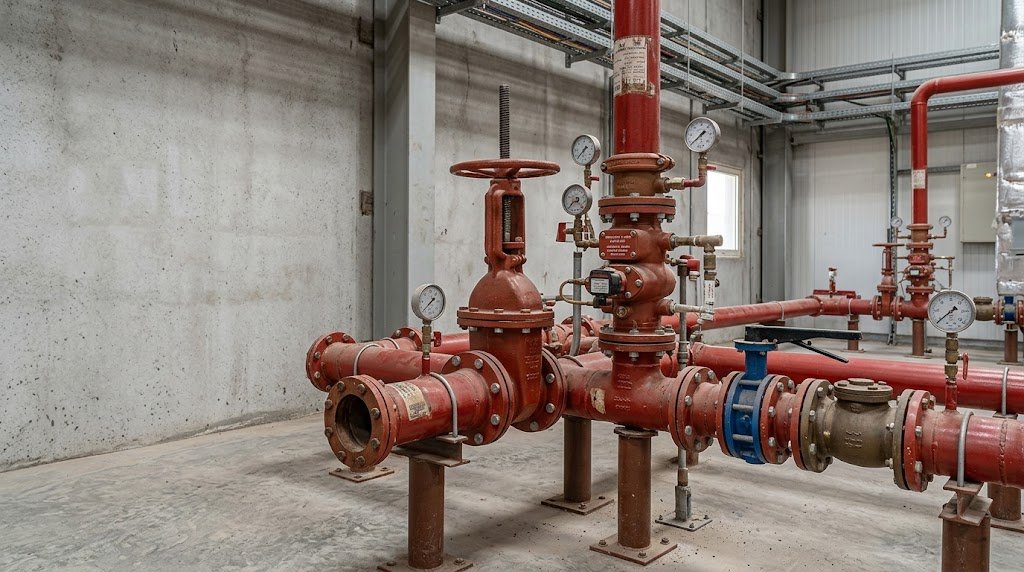
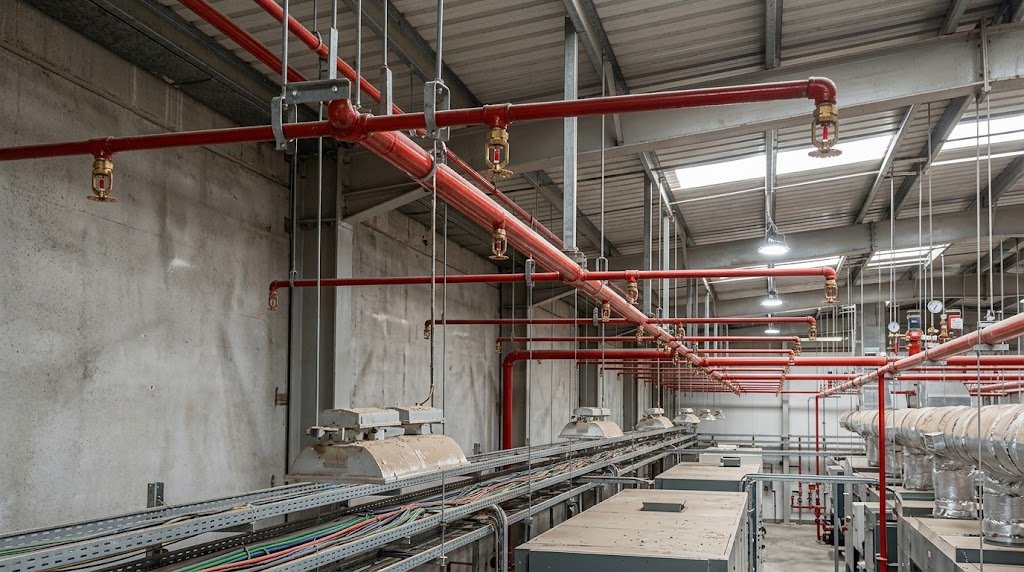
In some facilities, fire hose cabinets, sprinkler systems, or other fire protection systems may also be part of the safety setup depending on the building type and project requirements. The key point is that the system should be complete, clear, testable, and easy to maintain.
Protecting cold chain continuity
In the seafood sector, the cold chain is not a secondary part of the operation. It is central to product quality. Any unplanned stoppage in electricity, refrigeration, warehouse access, or loading activity can affect product quality, shipment speed, and customer trust.
Good fire safety systems do not only protect the building; they help protect the operation itself. Early detection, visible extinguishers, clear escape routes, and regular maintenance all reduce the chance of unplanned downtime or larger losses when a problem occurs.
Safety is connected to business continuity
In food facilities, a fire incident may mean more than damage to part of a building. It can mean delayed shipments, affected products, interrupted supply chain activity, and operational losses. This is why fire and safety systems should be part of a business continuity plan.
How Azeidk supported a NAQUA-related operating environment
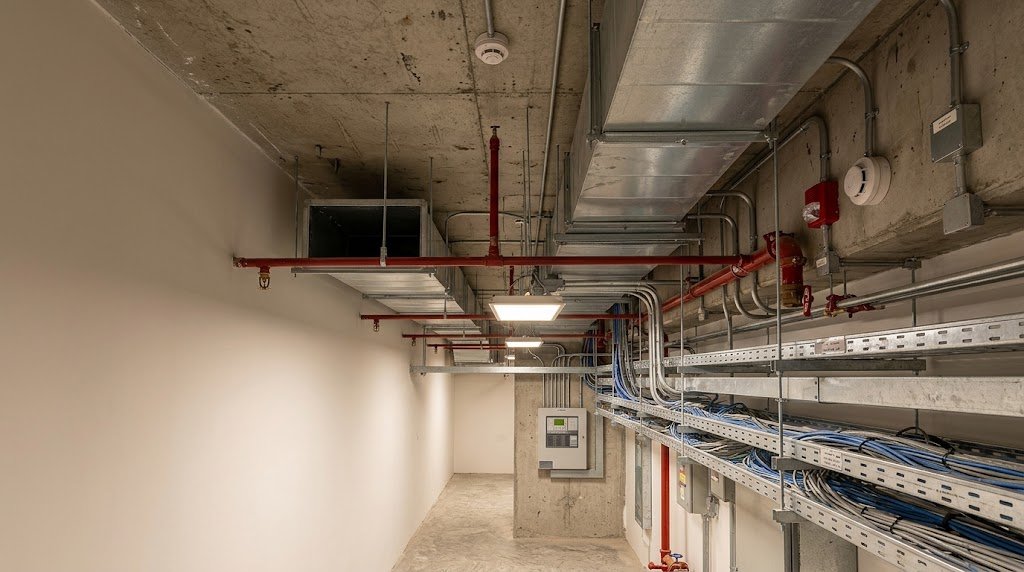
As part of Azeidk’s experience in fire and safety projects across Saudi Arabia, the company supported work related to fire alarm systems, fire protection, and extinguishers in one of NAQUA’s warehouse environments. This reflects the importance of having a technical partner that understands sensitive operating spaces such as seafood warehouses and food supply chain facilities.
This type of work is not only about supplying devices or placing extinguishers. The more important part is understanding the site: cold storage areas, product movement, loading points, electrical panels, circulation routes, and daily operating requirements. When the facility is linked to a sensitive food sector, every detail in the safety system matters.
What Azeidk provides for this type of site
- Supply and installation of fire alarm systems
- Extinguisher selection and distribution based on risk type
- Review of alarm device locations and manual call points
- Support for fire protection systems based on site requirements
- Follow-up on technical comments before operation or handover
- Periodic maintenance support to keep the system ready
Mentioning NAQUA here is not only about naming a client. It is an example of the type of operating environment that requires practical safety: food warehouses, continuous movement, sensitive products, and systems that must work when needed.
Why maintenance matters after installation
Installing fire alarm systems, fire protection equipment, and extinguishers is not enough without follow-up after operation starts. In food warehouses, storage locations may change, product density may increase, and small faults can appear in devices, batteries, or control panels. If these details are not followed, they can become real risks or inspection comments.
Periodic maintenance helps confirm that the system works, extinguishers are ready, the fire alarm panel has no major unresolved faults, and the operating team understands how to respond to an alarm or technical note.
Good maintenance should include:
- Fire alarm panel inspection
- Detector and manual call point review
- Sounder and strobe testing
- Extinguisher pressure and inspection date review
- Checking that safety equipment is not blocked
- Recording technical notes and corrective actions
- Providing a clear report for site management
Seafood warehouse fire safety checklist
If you manage a food warehouse or a facility connected to cold chain and distribution operations, this short checklist can help review fire safety readiness:
- The fire alarm panel is visible and accessible
- Detectors are distributed according to storage and cold area conditions
- Manual call points are not blocked
- Sounders and strobes are audible and visible in operating areas
- Extinguishers match the risk type in each zone
- Extinguishers are visible and not blocked by pallets or goods
- Loading and unloading areas have clear safety coverage
- Electrical or control rooms receive special review
- Escape routes and emergency exits are open and clear
- Inspection and maintenance reports are updated
- The operating team knows what to do when an alarm occurs
- The system is reviewed when storage layout or density changes
In the end, the success of major food facilities does not depend only on product quality. It also depends on the strength of the systems that protect production, storage, and distribution. With companies like NAQUA representing an important model in Saudi aquaculture, investing in fire and safety systems becomes part of protecting quality, operation, and long-term facility reputation.