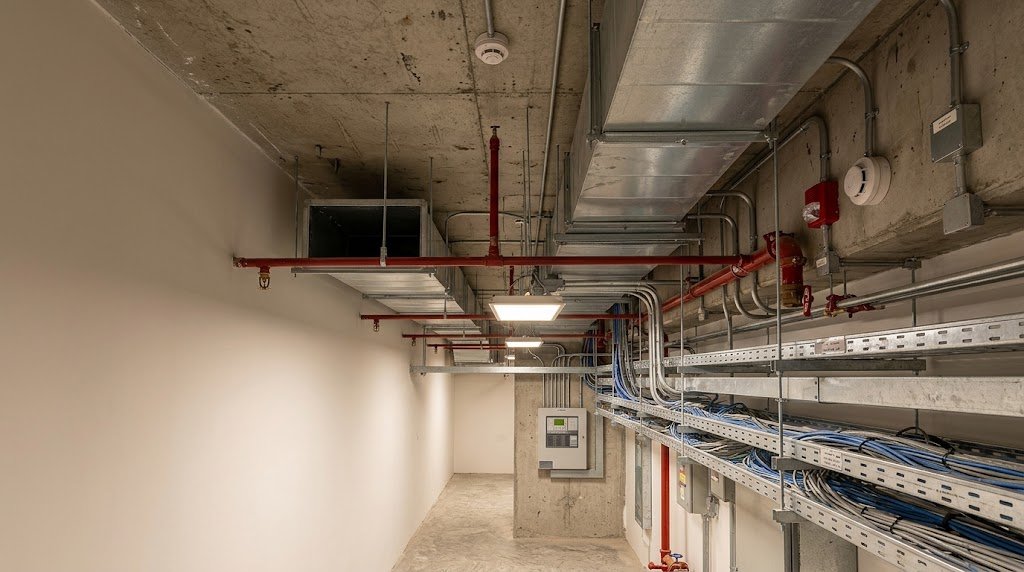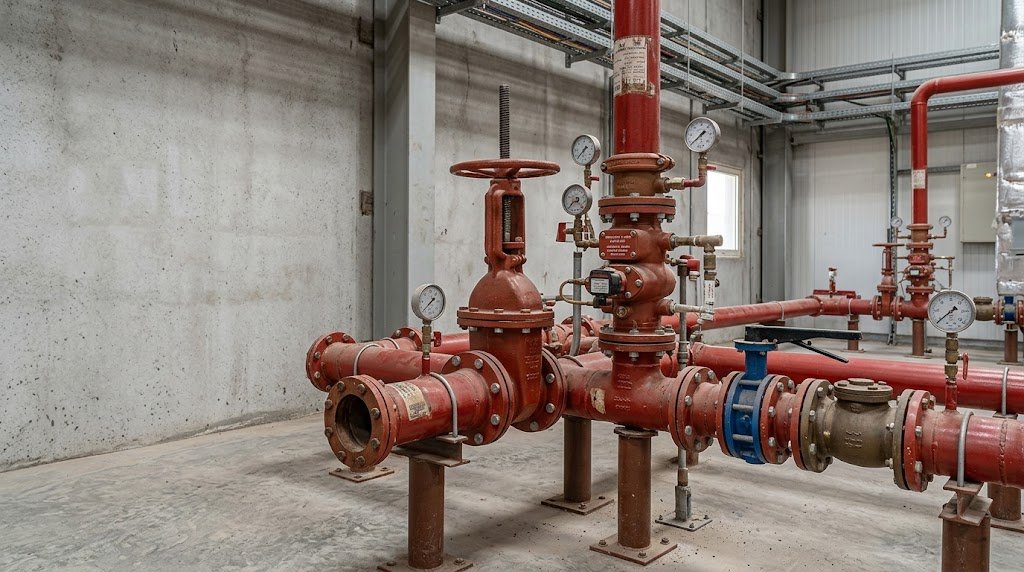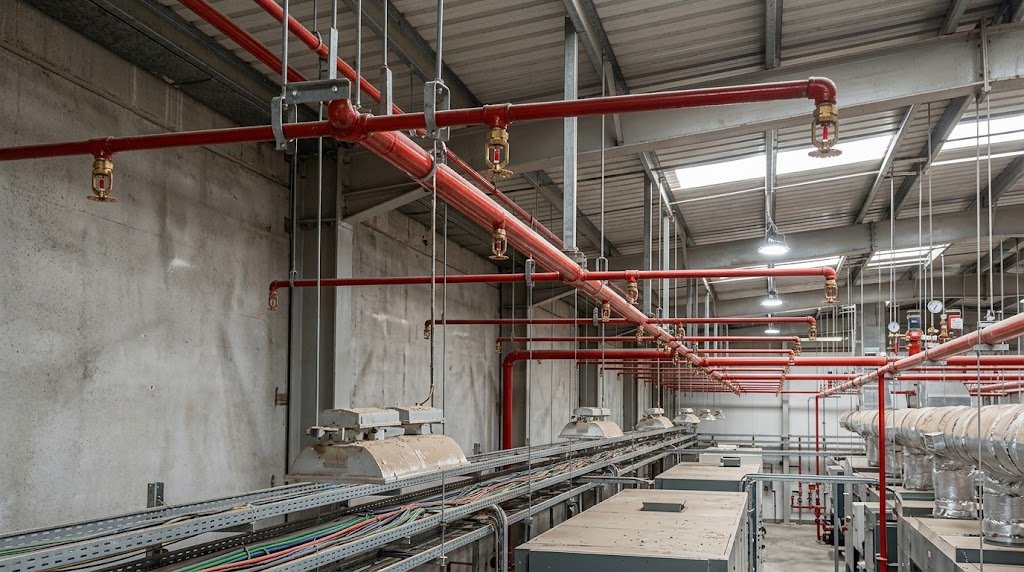
Fire system installation in warehouses and factories needs more attention than many project teams expect. These sites usually have large spaces, high storage levels, production areas, loading docks, machinery, changing layouts, and different fire risks in one facility. A system may look complete on drawings, but still fail during inspection, testing, maintenance, or real operation if key installation details are missed. This guide explains common mistakes in warehouse and factory fire systems, and what project teams should review before handover.
- 01 - Why warehouses and factories need special fire system attention
- 02 - Mistake 1: Installing without reviewing the real site layout
- 03 - Mistake 2: Ignoring storage height and material type
- 04 - Mistake 3: Weak fire alarm device distribution
- 05 - Mistake 4: Treating the fire pump room as a separate item
- 06 - Mistake 5: Poor valve access and unclear labeling
- 07 - Mistake 6: Forgetting loading docks and high-risk zones
- 08 - Mistake 7: Testing equipment separately instead of as one system
- 09 - Mistake 8: Missing documents before handover
- 10 - Brands and systems often seen in warehouse and factory projects
- 11 - How Azeidk supports fire system projects
- 12 - Final checklist before handover
Why warehouses and factories need special fire system attention
Warehouses and factories are different from standard office or retail spaces. The risk level can change based on stored materials, production processes, ceiling height, ventilation, heat sources, machinery, packaging materials, and movement of people and vehicles.
A fire system in these facilities should not only be installed to match a drawing. It should match the way the site actually works every day. This includes storage changes, loading activity, equipment movement, blocked areas, maintenance access, and future expansion.
Good fire system installation in warehouses and factories should support:
- Early fire detection inside different operating areas
- Proper fire fighting coverage based on site risk
- Clear access to pumps, valves, hose cabinets, and control panels
- Safe evacuation and emergency response
- Inspection readiness before handover
- Easy maintenance after operation starts
Mistake 1: Installing without reviewing the real site layout
One of the most common mistakes is starting installation based only on drawings without checking the actual site conditions. In warehouses and factories, the real layout may change because of storage racks, machines, partitions, temporary offices, production lines, loading areas, or new equipment.
Why this causes problems
If the installation team does not review the site carefully, detectors may be installed in weak locations, sprinkler coverage may be affected, valves may become hard to access, or fire hose cabinets may be blocked later by storage or equipment.
What should be reviewed
- Actual storage locations
- Production line layout
- Ceiling height and obstructions
- Access routes for maintenance and emergency response
- Equipment that may block detectors, sprinklers, valves, or cabinets
- Future expansion or expected layout changes
Mistake 2: Ignoring storage height and material type
Storage height and material type are critical in warehouse fire protection. A low-risk storage area is not the same as a high-rack warehouse with cartons, plastics, chemicals, packaging materials, or combustible goods.
When storage type is ignored, the selected fire fighting solution may not match the actual risk. This can create problems during technical review, inspection, or operation.
Common warning signs
- Sprinkler selection is not reviewed against storage height
- Goods are stored higher than planned
- Racks are added after installation without checking coverage
- Combustible materials are stored in areas designed for lower risk
- Fire hose cabinets or extinguishers are blocked by pallets
The fire system should be reviewed whenever the storage method changes, especially in active warehouses where layouts and stock types change frequently.
Mistake 3: Weak fire alarm device distribution
Fire alarm systems in factories and warehouses should be designed around real detection needs. A detector placed in the wrong area, or a manual call point hidden behind equipment, may reduce the system’s practical value.
Issues that often appear
- Detectors installed without considering airflow or dust
- Manual call points placed far from exits or operating areas
- Sounders and strobes not clearly heard or seen in noisy zones
- Device names not matching the real location
- Fire alarm panel showing unclear zones or repeated faults
In industrial sites, dust, vibration, heat, humidity, and heavy machinery can affect fire alarm performance. Device selection and placement should reflect the site conditions, not only a standard layout.
Mistake 4: Treating the fire pump room as a separate item
The fire pump room is sometimes treated as a separate mechanical space, while it is actually a central part of the full fire fighting system. If the pump room is not ready, the whole system may lose its reliability during testing or emergency conditions.
What can go wrong
- Controllers are installed but not fully tested
- Jockey pump behavior is not reviewed
- Suction and discharge valves are not clearly identified
- Pressure readings are not stable
- Drainage is weak during testing
- Access and ventilation are not properly checked
The pump room should be tested as part of the full system, not only as individual equipment. Water flow, pressure, controller readiness, valve positions, and testing method should all be reviewed before handover.
Mistake 5: Poor valve access and unclear labeling
In many sites, valves are installed correctly but become hard to find, hard to reach, or unclear to the maintenance team. This becomes a serious problem during inspection, testing, or emergency response.
Why valve clarity matters
During an emergency, the team should not waste time searching for the right valve. Valve names, positions, and operating condition should be clear and easy to understand.
Items to check
- Main valves are visible and accessible
- Zone valves are labeled clearly
- Valve status is easy to identify
- Inspection and test valves are not hidden
- No storage or equipment blocks access
- Valve locations match the drawings and records
Mistake 6: Forgetting loading docks and high-risk zones
Loading docks, packaging areas, waste collection points, battery charging areas, electrical rooms, and production zones can carry higher risk than normal circulation areas. These zones are sometimes not given enough attention during installation.
A good fire system review should identify areas where risk is higher because of materials, heat, electrical equipment, vehicle movement, or frequent human activity.
Examples of areas that need careful review
- Loading and unloading docks
- Packaging and carton storage areas
- Electrical rooms and control rooms
- Battery charging or forklift charging areas
- Production lines with heat or moving machinery
- Waste collection and temporary storage points
- Server rooms or technical rooms inside the facility
Mistake 7: Testing equipment separately instead of as one system
Testing each part alone is not enough. A fire alarm panel may work, a pump may run, and valves may be open, but the full system still needs integrated testing to confirm that all parts work together.
Integrated testing should review
- Fire alarm signals and notification devices
- Interfaces with elevators, HVAC, doors, or shutdown systems
- Fire pump operation under test conditions
- Water flow and pressure readings
- Valve position and system response
- Manual call points and detector activation scenarios
- Testing records and corrective action notes
The goal is not only to prove that equipment is installed. The goal is to prove that the system can respond correctly under a practical test scenario.
Mistake 8: Missing documents before handover
Documentation is often treated as a final step, but it should be prepared throughout the project. Missing documents can delay handover even when the installation is acceptable.
Documents that should be organized include:
- Approved drawings and as-built drawings
- Fire alarm and fire fighting layouts
- Data sheets and technical submittals
- Product certificates when required
- Testing and commissioning reports
- Fire pump test records
- Valve list and system zone information
- Maintenance instructions
- Operation notes for the facility team
Good documentation makes inspection, operation, and future maintenance easier for everyone involved in the project.
Brands and systems often seen in warehouse and factory projects
In warehouse and factory fire protection projects, teams may work with different brands and systems depending on project requirements. Names such as NAFFCO, SFFECO, TYCO, Victaulic, Potter, Hochiki, Apollo, Notifier, Siemens, Bosch, Context Plus, AFC, and Falcon Gold may appear during design, supply, installation, or maintenance discussions.
The success of the project does not depend on the brand name alone. It depends on correct system selection, proper installation, site-based testing, clear documents, and maintenance follow-up after operation starts.
How Azeidk supports fire system projects
Azeidk supports warehouses, factories, and industrial facilities in fire alarm, fire fighting, safety, CCTV, and maintenance works across Saudi Arabia. The focus is on practical site needs, system readiness, and clear follow-up before and after handover.
Azeidk can support projects through:
- Reviewing project requirements before system selection
- Supplying suitable fire alarm and fire fighting products
- Supporting installation, testing, and commissioning work
- Reviewing fire pump room readiness
- Following up technical comments before inspection
- Preparing reports and maintenance records
- Providing maintenance contracts for fire and safety systems
- Supporting CCTV and site monitoring needs where required
For warehouses and factories, the best result comes from connecting design, supply, installation, testing, and maintenance as one continuous process.
Final checklist before handover
Use this checklist before handing over a warehouse or factory fire system:
- The actual site layout has been reviewed against the drawings
- Storage height and material type have been considered
- Fire alarm devices are correctly placed and clearly named
- Sounders and strobes are suitable for noisy or large spaces
- Fire pump room readings, valves, drainage, and controllers are checked
- Main and zone valves are accessible and labeled
- Loading docks and high-risk areas are reviewed
- Fire hose cabinets and extinguishers are visible and accessible
- The full system has been tested as one connected setup
- Testing and commissioning reports are prepared
- As-built drawings and product documents are ready
- Maintenance responsibilities are clear after handover