Fire sprinkler systems are among the most important automatic fire protection systems used in buildings and facilities. Their purpose is to help control fire at an early stage by discharging water directly over the affected area when sprinkler heads are activated by heat.
A properly designed sprinkler system can support life safety, reduce fire spread, protect assets, and improve emergency readiness. However, sprinkler performance depends on correct design, suitable components, reliable water supply, proper installation, testing, and continuous maintenance.
- 01 - What is a fire sprinkler system?
- 02 - Why sprinkler systems are important
- 03 - Where fire sprinkler systems are used
- 04 - Main types of sprinkler systems
- 05 - Main components of a sprinkler system
- 06 - Key design and selection considerations
- 07 - Water supply, pumps, and valves
- 08 - Installation and coordination requirements
- 09 - Testing, inspection, and commissioning
- 10 - Maintenance and long-term readiness
- 11 - Common mistakes in sprinkler projects
- 12 - Azeidk’s role in fire sprinkler systems
- 13 - Checklist before approving a sprinkler system
What is a fire sprinkler system?
A fire sprinkler system is a fixed water-based fire protection system installed throughout a building or selected protected areas. It includes a network of pipes connected to sprinkler heads that discharge water when heat activates the sprinkler element.
Sprinkler systems are designed to deliver water to the fire area automatically. In most cases, only the sprinkler heads exposed to enough heat will operate, depending on the system type and design. This helps apply water directly where it is needed.
Important point
Sprinkler systems are not only ceiling devices. They are complete systems that depend on pipes, valves, water supply, hydraulic design, installation quality, inspection, testing, and maintenance.
Why sprinkler systems are important
Fire can spread quickly inside buildings, especially when combustible materials, stored goods, furniture, electrical equipment, or operational processes are present. Sprinkler systems help reduce this risk by responding automatically when heat reaches the sprinkler head.
In many buildings, sprinkler systems are part of the overall life safety and fire protection strategy. They work alongside fire alarm systems, fire pumps, hose reels, hydrants, extinguishers, smoke control, emergency exits, and maintenance procedures.
Sprinkler systems help support:
- Automatic response to fire conditions.
- Early control of fire spread.
- Protection of building occupants and assets.
- Reduction of fire damage and downtime.
- Support for emergency response teams.
- Improved readiness in commercial, industrial, and residential facilities.
Where fire sprinkler systems are used
Fire sprinkler systems are used in many building types depending on the fire risk, occupancy, stored materials, building height, project requirements, and authority or consultant specifications.
Common applications
- Commercial buildings and office towers.
- Warehouses and storage facilities.
- Factories and industrial buildings.
- Hotels and hospitality facilities.
- Hospitals and healthcare buildings.
- Schools, universities, and public buildings.
- Shopping malls and retail spaces.
- Residential towers and mixed-use projects.
- Basements, parking areas, and service zones.
- Selected high-risk rooms or process areas.
The sprinkler design should always reflect the actual risk inside the protected area. A warehouse, office, parking area, hotel corridor, or factory zone may each require a different design approach.
Main types of sprinkler systems
Sprinkler systems are available in different types depending on building conditions, temperature, fire risk, water sensitivity, activation needs, and project requirements.
Wet pipe sprinkler system
A wet pipe system keeps water inside the sprinkler pipes at all times. It is one of the most common sprinkler system types and is used in many buildings where freezing or special conditions are not a concern.
Dry pipe sprinkler system
A dry pipe system keeps pressurized air or gas in the pipes, with water held back by a dry pipe valve. It is used in selected areas where water-filled pipes may not be suitable due to temperature or environmental conditions.
Pre-action sprinkler system
A pre-action system uses additional detection or control logic before water enters the sprinkler piping. It may be used in sensitive areas where accidental water discharge must be carefully managed.
Deluge system
A deluge system uses open nozzles or sprinklers and releases water over a protected area when activated. It is used in selected high-hazard applications according to project design.
Main components of a sprinkler system
A sprinkler system includes several components that must be selected, installed, and tested correctly. The reliability of the system depends on the performance of all parts together.
Common sprinkler system components
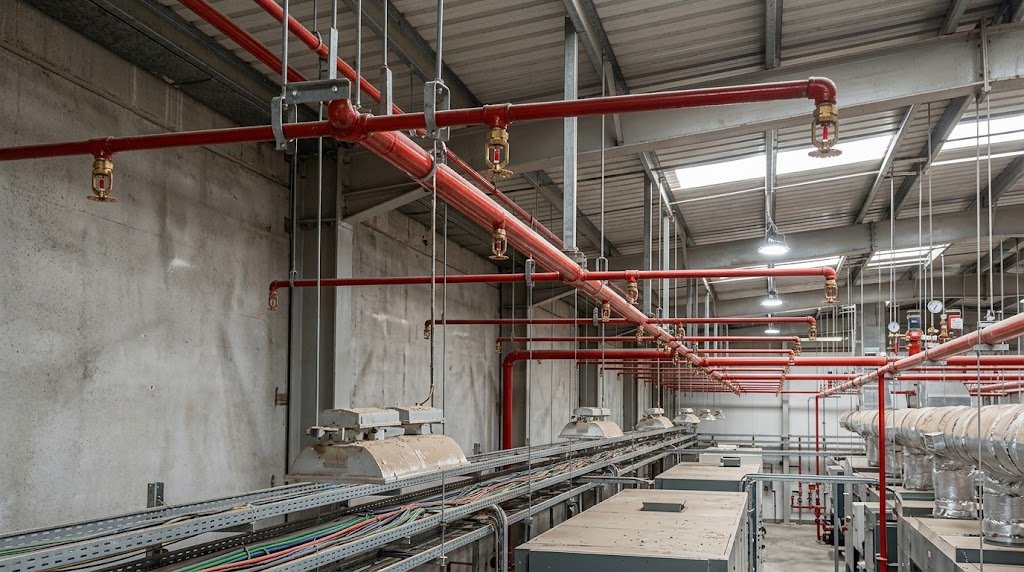
- Sprinkler heads.
- Main and branch sprinkler piping.
- Risers and zone control assemblies.
- Alarm check valve or control valve assembly.
- Gate valves, butterfly valves, and check valves.
- Flow switches and supervisory switches.
- Pressure gauges and test connections.
- Drain lines and inspector test points.
- Fire water tank and fire pump where required.
- Pipe hangers, supports, fittings, and couplings.
- Monitoring and interface points where required.
Each component must match the project design. A wrong sprinkler type, incorrect valve arrangement, poor pipe support, or missing test point can affect the system’s operation and maintenance.
Key design and selection considerations
Sprinkler design should start from the building use and hazard classification. The system must be designed to provide suitable water discharge over the protected area, taking into account ceiling height, occupancy, stored materials, pipe routing, pressure, flow, and water supply.
Important design factors
- Building use and protected area risk.
- Hazard level and expected fire load.
- Ceiling height and obstruction conditions.
- Sprinkler head type, temperature rating, and spacing.
- Pipe sizing and routing.
- Hydraulic calculations and required flow.
- Available pressure and fire pump requirements.
- Water tank capacity and supply arrangement.
- Valve locations and zone control.
- Inspection, testing, and maintenance access.
A sprinkler system should not be copied from another project without review. Every facility has different dimensions, risks, materials, usage patterns, and coordination requirements.
Water supply, pumps, and valves
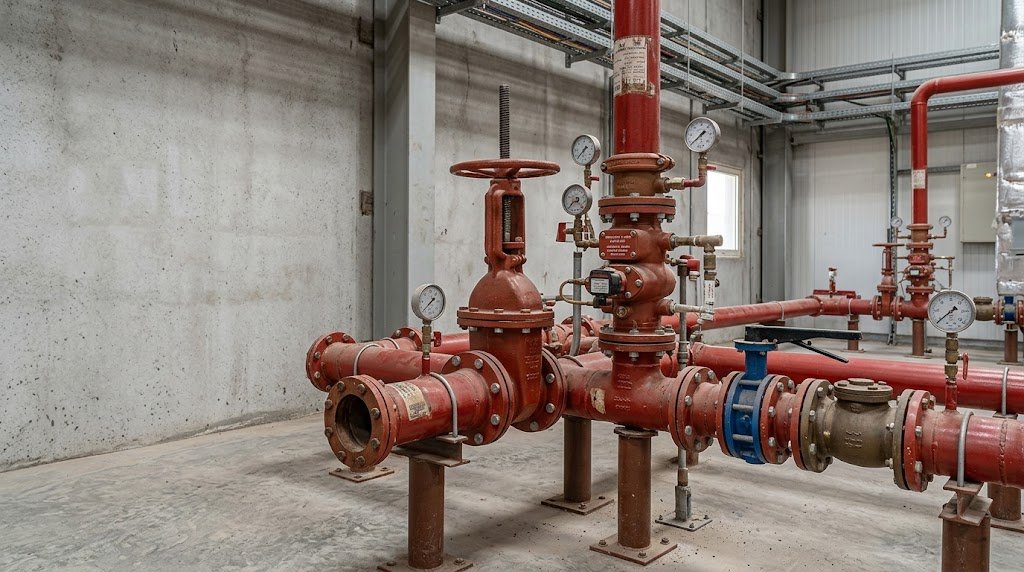
Sprinkler systems depend on a reliable water supply. In many projects, this includes a fire water tank, fire pumps, suction and discharge piping, zone valves, alarm check valves, flow switches, drains, and test points.
If the water supply is weak, the sprinkler system may not achieve the required performance. That is why hydraulic calculations, pump selection, tank capacity, pressure conditions, and valve arrangement must be reviewed together.
Water supply review should include:
- Available water source and tank capacity.
- Required system demand and hydraulic calculations.
- Fire pump flow and pressure.
- Pump controller and testing arrangement.
- Main control valves and zone valves.
- Alarm check valve or riser assembly.
- Drainage and inspector test connections.
- Monitoring signals for flow or valve status where required.
Installation and coordination requirements
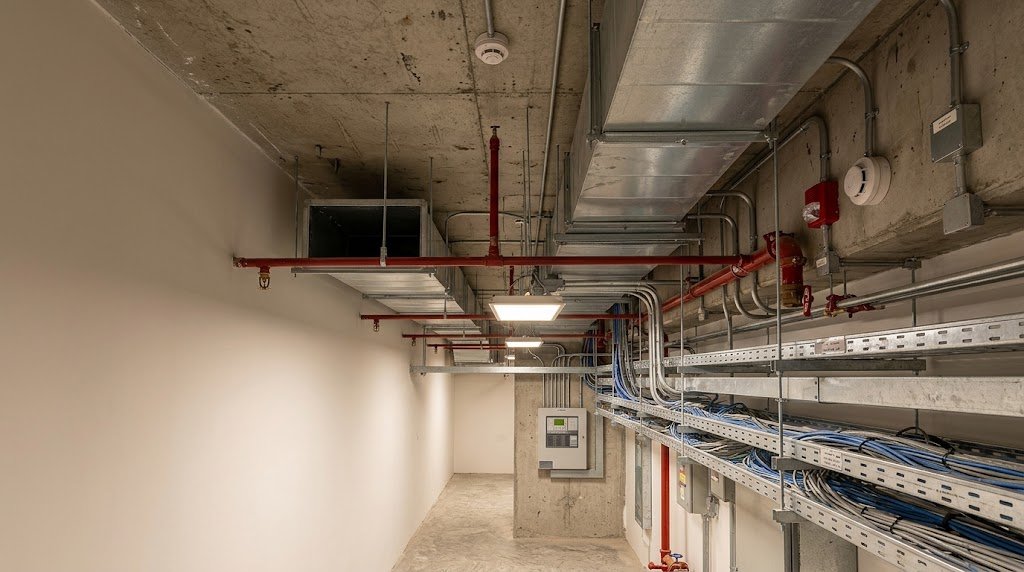
Sprinkler installation requires careful coordination with architectural, structural, mechanical, electrical, HVAC, ceiling, lighting, and low current systems. Poor coordination can cause clashes, blocked sprinkler coverage, difficult maintenance access, or installation delays.
Installation coordination should cover:
- Sprinkler head positions and spacing.
- Pipe routing above ceilings or in exposed areas.
- Clearance from ducts, beams, lights, cable trays, and equipment.
- Pipe supports, hangers, and seismic or movement considerations where required.
- Valve room or riser accessibility.
- Drainage and test point locations.
- Coordination with false ceiling tiles and architectural finishes.
- Access for inspection and maintenance.
- Updated drawings after site changes.
A sprinkler system that is installed without coordination may appear complete, but its coverage or maintenance access may be affected by other building services.
Testing, inspection, and commissioning
Testing and commissioning confirm that the sprinkler system is installed correctly and ready for operation. The required tests depend on the project specifications, system type, installation stage, and consultant requirements.
Common checks may include:
- Visual inspection of sprinkler heads and pipe installation.
- Checking pipe supports, valves, drains, and test points.
- Hydrostatic pressure testing where required.
- Flushing and cleaning of pipework where required.
- Flow switch and supervisory switch testing.
- Alarm check valve or control valve testing.
- Fire pump operation and pressure verification where connected.
- Zone identification and valve status checks.
- Reviewing as-built drawings and testing reports.
Testing results should be documented clearly. Proper records help consultants, owners, and facility teams understand system status and follow up on corrective actions before handover.
Maintenance and long-term readiness
A sprinkler system must remain ready after installation. Over time, closed valves, damaged sprinkler heads, corrosion, leaks, blocked access, painted sprinkler heads, missing caps, pressure issues, or poor records may affect system reliability.
Maintenance should include:
- Checking main valves and zone valves.
- Inspecting sprinkler heads for damage, obstruction, or paint.
- Checking pressure gauges and system pressure.
- Testing flow switches and supervisory switches.
- Reviewing drains, test connections, and riser assemblies.
- Checking pump operation where the system is connected to fire pumps.
- Inspecting pipe leakage, corrosion, and visible damage.
- Keeping records of inspection, testing, and corrective actions.
- Reviewing building changes that may affect sprinkler coverage.
Maintenance is especially important when building usage changes. A storage area may become more congested, ceiling layouts may change, or new equipment may create obstructions that were not present during the original design.
Common mistakes in sprinkler projects
Many sprinkler system problems are caused by weak design review, poor coordination, incorrect installation, or lack of maintenance after handover.
- Using the same sprinkler design for different risk areas without review.
- Ignoring hazard classification and stored material changes.
- Installing sprinkler heads too close to obstructions.
- Wrong sprinkler spacing or unsuitable sprinkler type.
- Poor pipe support or incorrect pipe routing.
- Closed or inaccessible control valves.
- Missing drain points or inspector test connections.
- Weak coordination with HVAC ducts, cable trays, lighting, and ceilings.
- Not updating drawings after site changes.
- Skipping regular inspection, testing, and maintenance.
Practical warning
A sprinkler system must be designed for the actual building risk and maintained after handover. Changes in storage, ceilings, walls, equipment, or occupancy can affect sprinkler coverage and performance.
Azeidk’s role in fire sprinkler systems
Azeidk supports fire sprinkler system projects as part of its fire protection scope. This may include reviewing project requirements, supporting system selection, supplying suitable components, coordinating installation, supporting testing, and providing maintenance and readiness support after handover.
Sprinkler systems require coordination between fire fighting, mechanical, architectural, electrical, ceiling, and facility teams. Azeidk helps clients approach sprinkler systems as complete fire protection networks, not only as sprinkler heads installed in ceilings.
How Azeidk supports clients
- Reviewing project requirements and sprinkler system scope.
- Supporting suitable system and component selection.
- Providing sprinkler heads, valves, pipes, fittings, and related components according to project needs.
- Coordinating with fire pumps, tanks, valves, and fire alarm interfaces.
- Supporting installation, testing, commissioning, and handover.
- Helping prepare technical documents and as-built records.
- Providing inspection, maintenance, troubleshooting, and readiness support.
The goal is to make sure the sprinkler system is suitable for the building, correctly installed, properly tested, clearly documented, and maintained for long-term readiness.
Checklist before approving a sprinkler system
- The building use and hazard level have been reviewed.
- The protected areas and sprinkler coverage requirements are clearly defined.
- Sprinkler head type, spacing, and temperature rating are suitable.
- Pipe routing, sizing, and hydraulic calculations have been reviewed.
- Water supply, tank capacity, and fire pump requirements are confirmed.
- Valves, risers, drains, and test points are properly located.
- Coordination with HVAC, electrical, ceilings, lighting, and low current systems is complete.
- Testing and commissioning procedures are defined.
- As-built drawings, reports, and maintenance documents are prepared.
- Inspection and maintenance plan is ready after handover.
In the end, fire sprinkler systems are a major part of automatic fire protection in buildings and facilities. The right sprinkler solution depends on correct design, reliable water supply, approved and suitable components, proper installation, testing, documentation, and long-term maintenance. With Azeidk, clients can approach sprinkler systems as complete fire protection networks that support building safety, operational readiness, and long-term protection.