Novec Fire Suppression System for Sensitive Equipment
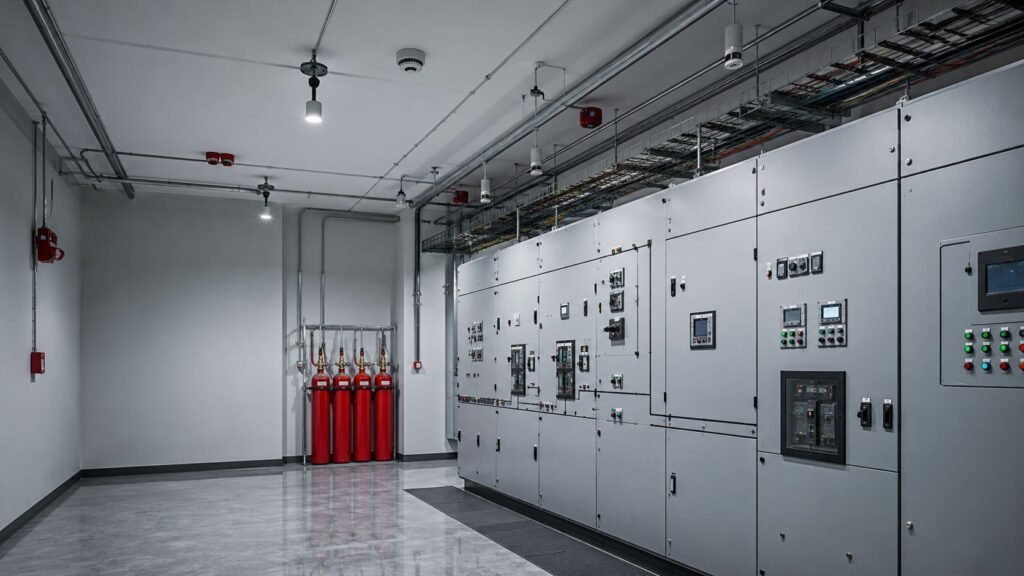
Novec Fire Suppression System for Sensitive Equipment Home / Azeidk Blog / Novec Fire Suppression System for Sensitive Equipment Novec fire suppression systems, often referred to in projects as Novec 1230 or FK-5-1-12 systems, are clean agent fire suppression solutions used to protect server rooms, data centers, electrical rooms, control rooms, telecom rooms, and other sensitive areas. These systems are designed to suppress fire quickly without using water and without leaving residue inside the protected space. As the global clean agent market continues to change, project owners and contractors need to look beyond the commercial name alone. The important questions are: What agent is being used? Is it available with proper technical documents? Does it match the project requirements? Is it suitable for the protected space? At Azeidk, clean agent fire suppression projects are supported through technical review, system selection, supply, installation support, and maintenance, with solutions available through Azeidk’s agency for American Fire Control. Table of Contents 01 – What is a Novec fire suppression system? 02 – Novec 1230 vs FK-5-1-12 03 – Where is Novec used? 04 – Novec system components 05 – Novec vs FM200 06 – How to choose the right system 07 – Azeidk and American Fire Control 08 – Novec system maintenance 09 – Checklist before approving the system What is a Novec fire suppression system? Novec is a well-known commercial name associated with clean agent fire suppression systems used in sensitive areas. In many projects, the term is used to refer to systems based on FK-5-1-12, a clean fire extinguishing agent designed to suppress fire without leaving residue and without using water. This type of system is commonly selected when protecting equipment, data, documents, or operational continuity is important. That is why it is often found in server rooms, data centers, electrical rooms, control rooms, telecom rooms, and other technical spaces. Novec 1230 vs FK-5-1-12 It is important to separate the commercial name “Novec 1230” from the agent type known as FK-5-1-12. In the market, some people use the word Novec to describe the full system, while technically the agent, its source, documents, approvals, and availability should all be reviewed. Why this matters Material availability, product sources, regulations, and supplier options may change over time. A project decision should not be based only on a familiar commercial name. The owner or contractor should review the actual agent, certificate, approval documents, and suitability for the project design. When requesting a Novec or FK-5-1-12 system, it is better to ask for a clear explanation of the agent used, system components, calculation method, technical documents, and maintenance requirements before approving the supply. Where is Novec used? Novec or FK-5-1-12 systems are used in areas where water or foam may not be suitable, and where fast fire suppression is needed with reduced impact on sensitive equipment. Common applications Server rooms Data centers Electrical rooms and control panels Telecom and network rooms Industrial control rooms Archive rooms and sensitive equipment areas Spaces that need a clean agent instead of water-based protection Novec should not be selected only because a room contains electronics. Room size, enclosure integrity, ventilation, fire risk, consultant comments, and authority requirements should all be reviewed. Novec system components Like other clean agent fire suppression systems, a Novec system includes a group of components that work together to detect fire, warn occupants, and discharge the agent into the protected space. Clean agent cylinders Piping network and discharge nozzles Dedicated releasing control panel Smoke or heat detectors depending on the design Sounders, strobes, and warning devices Manual release station Abort switch when required Warning signs before entry or discharge HVAC or ventilation interface depending on design requirements Having the components is not enough. The system must be calculated, installed, tested, and maintained correctly. Wrong nozzle locations, missing release logic, poor room sealing, or missing documentation can affect system performance. Novec vs FM200 Novec and FM200 are both clean agent fire suppression system options, and both are commonly used in sensitive areas. The right choice depends on project requirements, approvals, agent availability, room size, design conditions, and budget. FM200 FM200-type systems usually rely on HFC-227ea and are widely used in server rooms, electrical rooms, telecom rooms, and control rooms. They are familiar in many clean agent fire suppression projects. Novec / FK-5-1-12 Novec or FK-5-1-12 systems are also used as clean agent solutions for sensitive applications. The project team should review agent availability, technical documents, and required approvals before selection. There is no single option that fits every project. The right decision starts with the protected space, not with the system name alone. How to choose the right system Before choosing Novec, FM200, or any clean agent system, the technical study should answer a few key questions. What type of room or area needs protection? What is the room volume in cubic meters? What equipment is installed inside the room? Can the room hold the required agent concentration? What are the consultant or Civil Defense requirements? Is the required agent available with suitable technical documents? Are future maintenance and spare parts clear? What is the budget and required scope of work? Answering these questions helps the client avoid choosing a system based only on a commercial name or comparing prices without understanding the full scope. Azeidk and American Fire Control Azeidk supports clean agent fire suppression projects through its agency for American Fire Control, helping projects that require protection for server rooms, data centers, electrical rooms, and control rooms in Saudi Arabia. With experience in fire protection systems, Azeidk helps owners and contractors understand the suitable choice between FM200 and Novec/FK-5-1-12 based on project conditions, technical requirements, approvals, and the most suitable available solution. Azeidk’s role in Novec and FK-5-1-12 projects Reviewing room requirements before pricing Clarifying the difference between available agents and systems Supplying suitable clean agent fire suppression solutions Supporting installation, testing, and commissioning Providing required technical documents Offering periodic maintenance after operation Novec system maintenance Maintenance is essential for keeping a Novec or
FM200 Fire Suppression System for Server Rooms
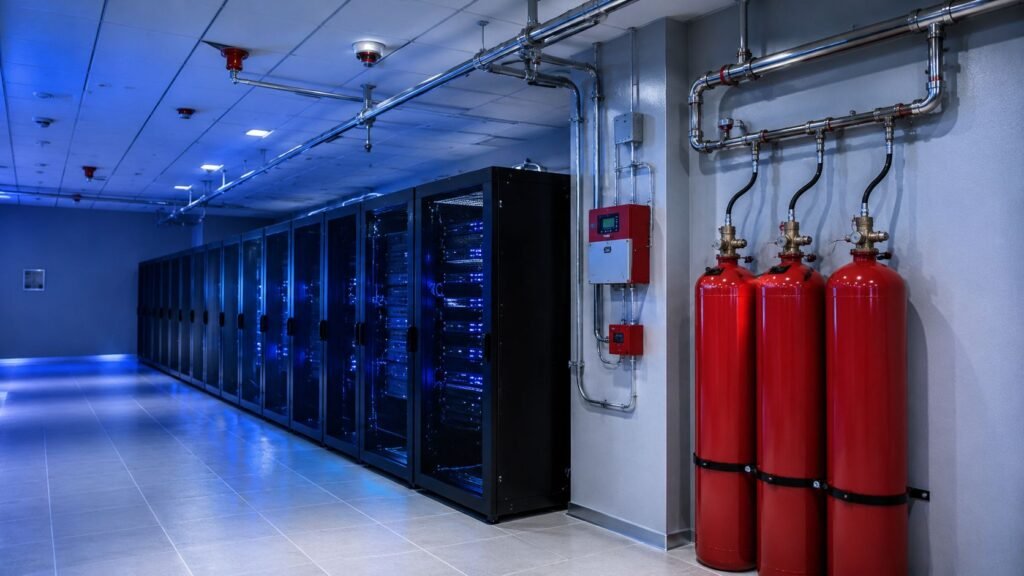
Novec Fire Suppression System for Sensitive Equipment Home / Azeidk Blog / Novec Fire Suppression System for Sensitive Equipment | Azeidk FM200 fire suppression systems are widely used to protect server rooms, data centers, control rooms, electrical rooms, telecom rooms, and other sensitive areas where water-based fire protection may damage equipment. The main purpose of an FM200 system is to suppress fire quickly inside the protected space without leaving residue after discharge. At Azeidk, FM200 systems are handled as part of a complete clean agent fire protection solution. The process starts with understanding the room, calculating the required agent quantity, reviewing detection and control requirements, selecting cylinders and nozzles, then supporting installation, testing, commissioning, and maintenance. Azeidk also supplies clean agent fire suppression solutions through its agency for American Fire Control, supporting projects that need clear technical documents and reliable system components. Table of Contents 01 – What is an FM200 fire suppression system? 02 – Where is FM200 used? 03 – FM200 system components 04 – Why FM200 needs accurate design 05 – Main advantages of FM200 06 – Common FM200 installation mistakes 07 – Azeidk and American Fire Control 08 – FM200 system maintenance 09 – Checklist before installing FM200 What is an FM200 fire suppression system? An FM200 system is a clean agent fire suppression system used in areas where fast fire control is needed with minimal impact on sensitive equipment. The agent commonly associated with this type of system is HFC-227ea, a clean fire extinguishing agent that does not leave residue after discharge. Unlike water or foam systems, FM200 does not flood the space with liquid or leave visible residue behind. That is why it is commonly used in rooms containing servers, control panels, communication equipment, electrical systems, and other assets that can be damaged by water. Where is FM200 used? FM200 is usually selected when protecting equipment and supporting business continuity are important. It is common in locations where system downtime, data loss, or equipment damage can be costly. Common FM200 applications Server rooms Data centers Electrical and control rooms Telecom and network rooms Archive rooms with sensitive documents Industrial control rooms Areas where water-based fire protection is not suitable FM200 should not be selected only because a room contains electronic equipment. The room volume, leakage points, ventilation, openings, equipment type, and fire risk should all be reviewed before choosing the system. FM200 system components An FM200 system is not just a cylinder. It is a complete setup that combines early detection, control logic, warning devices, discharge equipment, and agent distribution inside the protected room. Main components FM200 agent cylinders Piping network and discharge nozzles Dedicated releasing control panel Smoke or heat detectors depending on the design Sounders, strobes, and warning devices Manual release station Abort switch when required Warning and instruction signs Interface with HVAC or ventilation shutdown where needed Every component has a role. Poor detector placement, incorrect agent calculation, wrong nozzle distribution, or missing HVAC interface can affect system performance during a real event. Why FM200 needs accurate design FM200 performance depends heavily on correct design and calculation. The number of cylinders and the required agent quantity cannot be selected randomly. Each room has a different volume, leakage condition, ventilation setup, and operational need. Before installing FM200, the following points should be reviewed: Room volume in cubic meters Doors, openings, and possible leakage points Ventilation and air conditioning setup Type of equipment inside the room Room integrity requirements Cylinder location and pipe routing Alarm and release sequence Testing and handover requirements In some projects, a room integrity test may be required to check whether the protected space can hold the required agent concentration long enough after discharge. Main advantages of FM200 Fast suppression When designed and installed correctly, FM200 can help suppress fire quickly before it spreads inside the protected space. No residue after discharge One of the main reasons FM200 is used in sensitive areas is that it does not leave residue that requires cleanup after discharge. Suitable for sensitive equipment FM200 is commonly used in server rooms, electrical rooms, telecom rooms, and control areas because it does not rely on water or foam. Supports operational continuity In facilities that depend on data, control systems, or continuous operation, reducing post-incident damage is an important factor. Common FM200 installation mistakes Some FM200 system problems do not appear during installation, but they become clear during testing, inspection, or actual system operation. The most common mistakes include: Calculating agent quantity without accurate room volume review Ignoring ventilation openings or leakage points Installing nozzles in poor locations Missing HVAC or ventilation shutdown interface when required Not installing warning and instruction signs clearly Not training the operating team on the alarm and release sequence Ignoring maintenance after installation Missing technical documents and system records Azeidk and American Fire Control Azeidk supplies clean agent fire suppression solutions through its agency for American Fire Control, supporting projects that require clean agent systems for server rooms, electrical rooms, control rooms, and other sensitive areas. American Fire Control systems include clean agent solutions based on HFC-227ea, used in FM200-type applications, with technical documentation that helps owners, contractors, and consultants during supply, installation, and handover stages. How Azeidk supports FM200 projects Reviewing room requirements before supply Supplying suitable clean agent system components Preparing cylinders, panels, nozzles, and accessories Supporting installation, testing, and commissioning Providing required technical documents Offering periodic maintenance to keep the system ready FM200 system maintenance An FM200 system should not be left without follow-up after installation. Periodic maintenance is needed to confirm that cylinders are ready, the control panel is healthy, detectors are working, release and warning devices are accessible, and there are no active faults affecting system readiness. Maintenance should include: Checking cylinder pressure and weight according to technical requirements Reviewing the control panel and active faults Testing detectors and warning devices Reviewing manual release and abort switches Checking that the room layout, ventilation, or openings have not changed Reviewing nozzles and piping routes Updating inspection
NAQUA Saudi Arabia and Seafood Warehouse Fire Safety
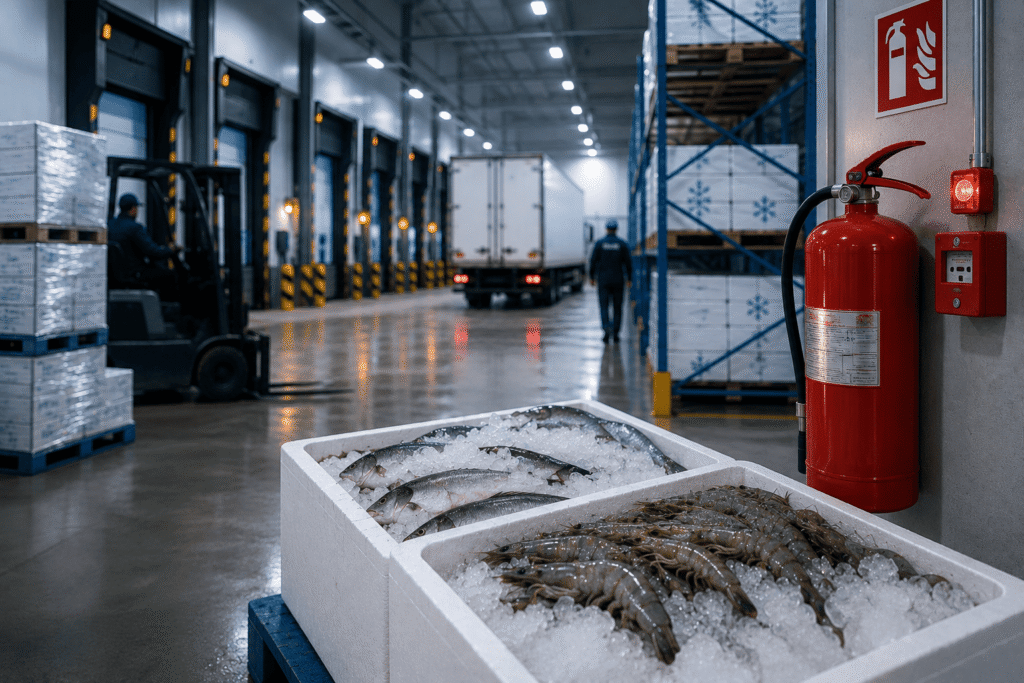
A practical article about NAQUA Saudi Arabia, seafood warehouse fire safety, and the role of fire alarm systems, fire protection, extinguishers, and maintenance in cold chain operations.
Smart Fire Detection Systems and AI Response Time
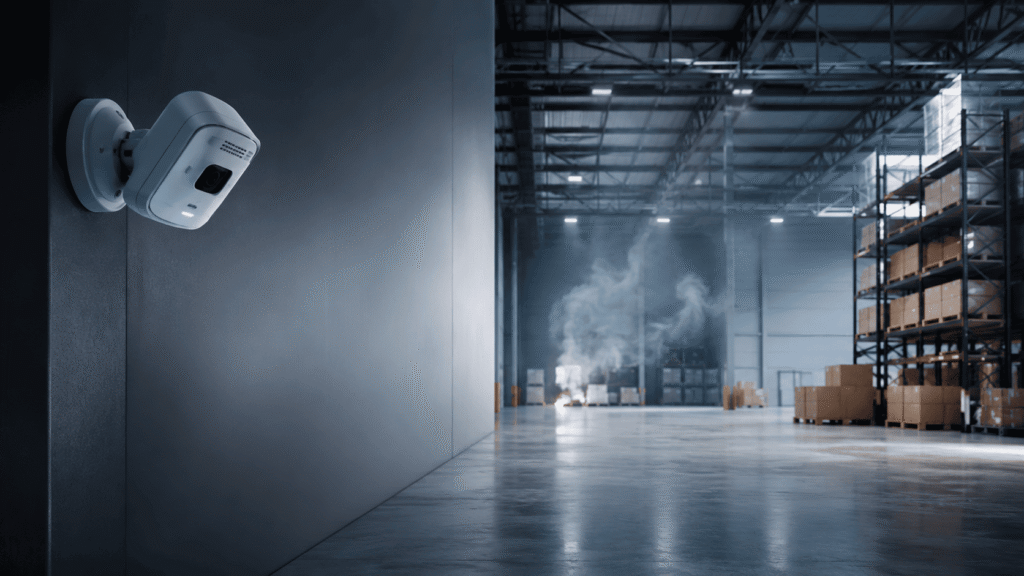
A practical guide explaining how AI-powered smart fire detection systems use computer vision, machine learning, multi-sensor data, and edge computing to detect fire earlier, reduce false alarms, and improve safety.
Fire Systems Cost in Saudi Arabia 2026
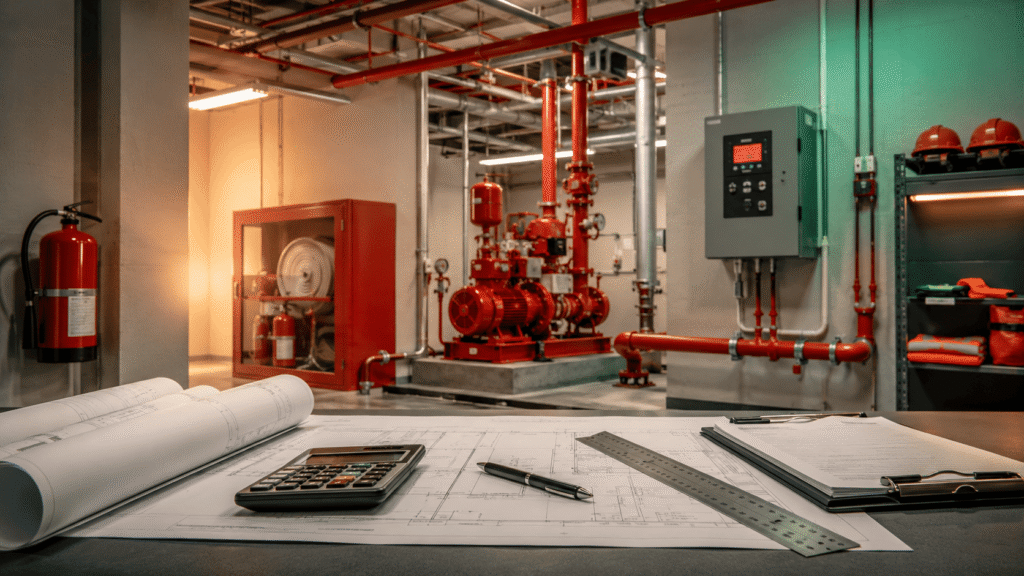
A practical guide explaining what affects fire systems cost in Saudi Arabia, including project type, area, fire alarm systems, sprinklers, pump rooms, special systems, maintenance, and quotation scope.
Saudi Civil Defense Requirements
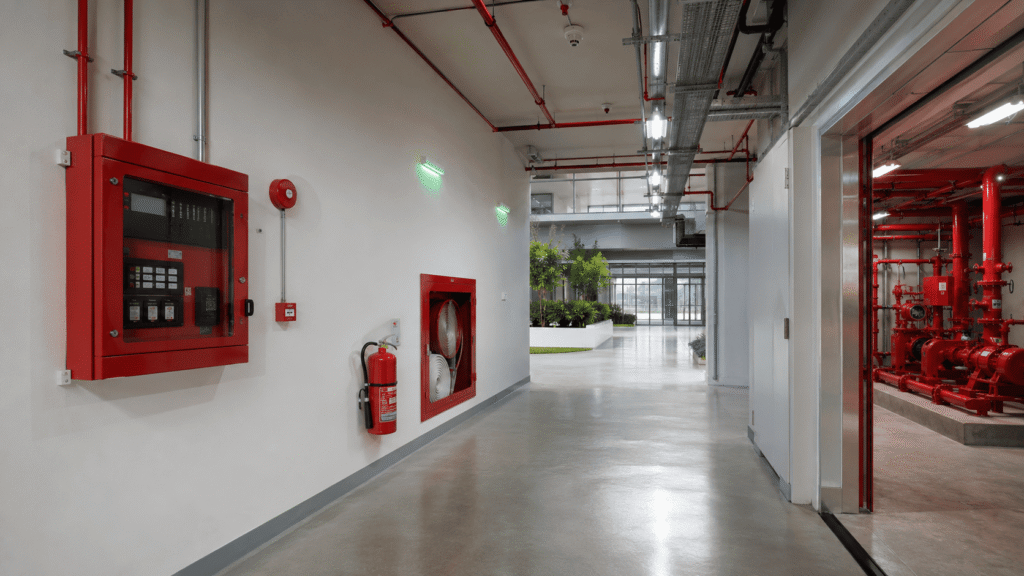
Saudi Civil Defense Requirements Home / Azeidk Blog / Saudi Civil Defense Requirements Saudi Civil Defense requirements for buildings and facilities in 2026 are not limited to one fire alarm panel, a few extinguishers, or a fire pump room. For most projects, readiness depends on a complete safety setup: fire alarm systems, fire fighting networks, pump rooms, emergency exits, evacuation routes, emergency lighting, technical documents, testing records, maintenance contracts, and site operation readiness. This guide gives project owners, contractors, consultants, and facility teams a practical way to understand what should be reviewed before designing, supplying, installing, maintaining, or preparing fire and safety systems for Civil Defense review in Saudi Arabia. This article is a practical guide, not a replacement for official Saudi Civil Defense regulations, Saudi Building Code requirements, project consultant comments, or the final authority review. Requirements may change according to project type, building use, activity risk, area, height, occupancy, city, and official comments. Table of Contents 01 – What Saudi Civil Defense requirements mean in practice 02 – Why requirements change by building type 03 – Fire alarm system requirements to review 04 – Fire fighting systems and water-based protection 05 – Fire pump room readiness 06 – FM200, clean agent, foam, kitchen hood, and special systems 07 – Emergency exits, escape routes, and emergency lighting 08 – CCTV, access control, and low current systems 09 – Maintenance contracts and inspection records 10 – Documents usually needed before review or inspection 11 – Common issues that delay Civil Defense readiness 12 – How to plan Civil Defense readiness by project stage 13 – Names and brands you may see while searching 14 – How Azeidk supports fire and safety readiness 15 – Final checklist for building and facility readiness What Saudi Civil Defense requirements mean in practice In real projects, Saudi Civil Defense requirements are not only about “having fire systems”. The real question is whether the building is safe, whether the installed systems match the project activity, whether the systems can be tested, and whether the site can be operated and maintained after handover. For owners and contractors, this means safety should be planned as one connected system. Fire alarm, fire fighting, pumps, exits, emergency lighting, special suppression, CCTV, access routes, maintenance, and documentation should work together. A site may have good products but still face problems if the installation, labels, testing records, or access routes are not ready. A practical Civil Defense readiness plan should answer these questions: What is the building activity and risk level? Which fire and safety systems are required for this project type? Are the installed products suitable for the site and supported with documents? Can the fire alarm and fire fighting systems be tested clearly? Are fire pump room readings, valves, and controllers ready? Are emergency exits, signs, and lighting clear? Are maintenance records available for existing facilities? Is the site prepared for operation, not only inspection? This is why Civil Defense readiness should start early in the project, not a few days before inspection. Why requirements change by building type A warehouse is not reviewed in the same way as a restaurant, a school, a factory, a hospital, a commercial building, or a residential tower. The building activity changes the risk profile, and the risk profile changes the safety systems that should be reviewed. Commercial buildings Commercial buildings usually need clear fire alarm coverage, safe evacuation paths, visible emergency signs, accessible extinguishers, fire fighting systems where required, and a maintenance plan that keeps the site ready during operation. Warehouses and logistics facilities Warehouses need special attention because storage height, rack layout, stored materials, loading docks, and vehicle movement can change the fire risk. Fire fighting coverage, valve access, hose cabinets, extinguishers, alarm notification, and maintenance access should be reviewed carefully. For more details on this topic, Azeidk has a dedicated guide about Fire System Installation Mistakes in Warehouses and Factories. Factories and industrial facilities Factories can include production lines, heat sources, electrical rooms, raw materials, packaging areas, and machinery. These areas may require different safety considerations within the same facility. Fire alarm device selection, detector placement, fire fighting coverage, and emergency response planning should reflect the actual process inside the site. Restaurants and commercial kitchens Kitchens may require special suppression systems for cooking equipment and extraction hoods. Fire risk in these areas is different from normal office or retail spaces, so kitchen hood suppression, shutoff interfaces, extinguishers, and maintenance records should be reviewed. Hospitals, schools, and high-occupancy buildings These buildings need extra attention because evacuation can be more complex. Alarm notification, emergency lighting, exits, signage, staff response, fire compartments, and maintenance records should be easy to understand and follow. The main point is simple: do not copy one fire safety solution from one project to another. The correct solution starts with understanding the building activity. Fire alarm system requirements to review Fire alarm systems are often the first system reviewed because they detect early signs of risk and alert people inside the building. A fire alarm system should not only be powered on; it should be correctly designed, clearly labeled, tested, and easy for the operation team to understand. Fire alarm control panel The panel should be accessible, readable, and free from unresolved major faults. Device names, zones, and system messages should be clear enough for the site team to understand what is happening during an alarm or fault. Detectors and manual call points Smoke detectors, heat detectors, beam detectors, manual call points, and modules should be selected and placed according to the site conditions. Dust, airflow, ceiling height, heat sources, and equipment layout can all affect performance. Sounders, strobes, and notification devices Notification devices should be visible and audible where people work or move. In noisy industrial areas, warehouses, or loading zones, alarm notification needs careful review. System interfaces Fire alarm systems may need to interface with elevators, HVAC, doors, smoke control, fire suppression systems, or emergency controls. These interfaces should be tested before handover. Choosing between conventional
Common Mistakes in Fire System Installation for Warehouses and Factories

A practical guide explaining common fire system installation mistakes in warehouses and factories, including poor device placement, storage risk, pump room issues, unclear valves, weak testing, and missing handover documents.
Civil Defense Fire Safety Approval in Saudi Arabia
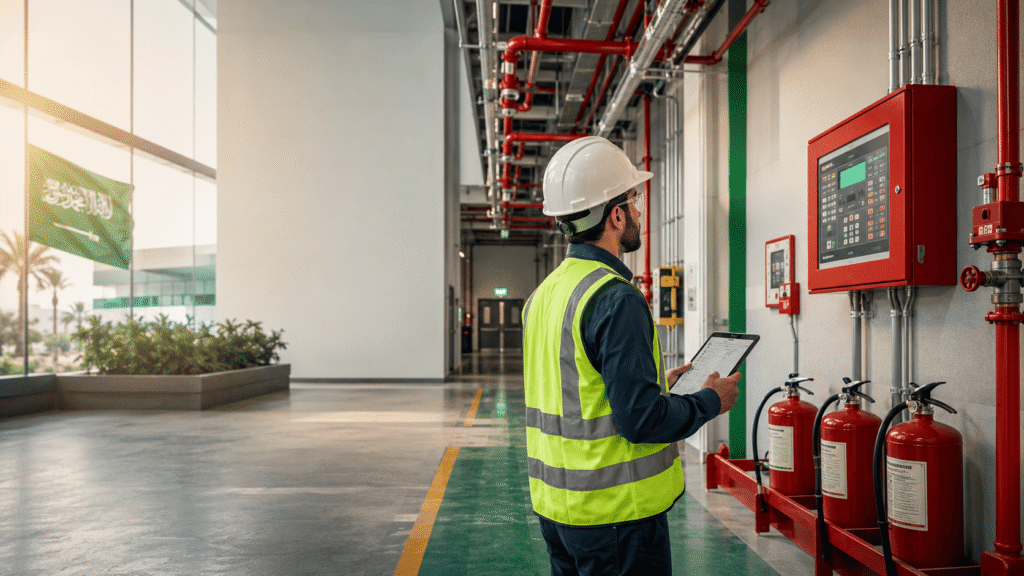
A practical guide explaining what to prepare before Civil Defense inspection in Saudi Arabia, including fire alarm systems, firefighting equipment, pump room checks, technical documents, maintenance records, and site readiness.
Fire System Maintenance Contracts in Saudi Arabia | Azeidk
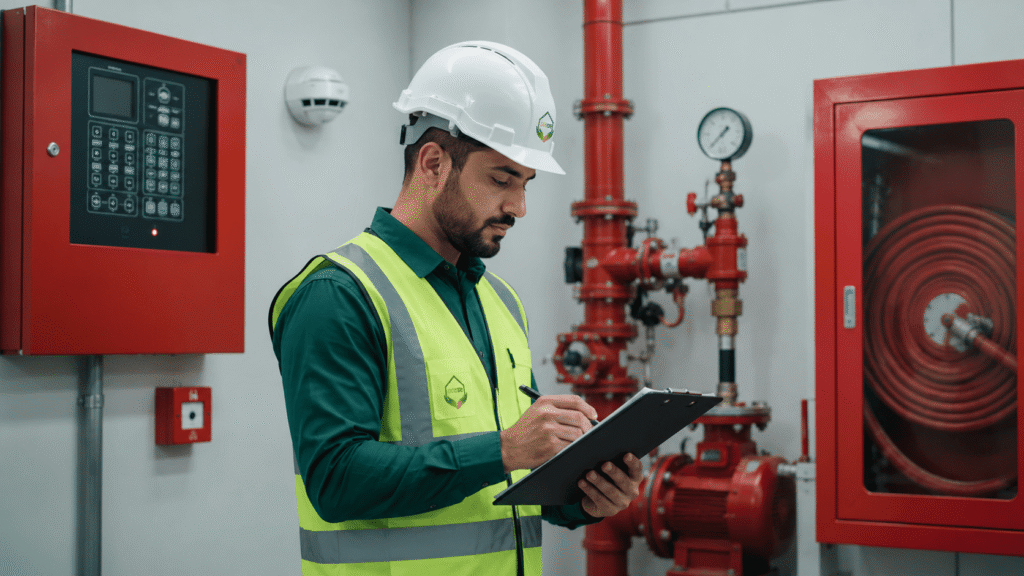
A practical guide explaining what to review before signing a fire system maintenance contract, including scope of work, visit frequency, technical reports, spare parts, emergency response, and inspection readiness.
Fire Alarm Systems in Saudi Arabia | Conventional vs Addressable
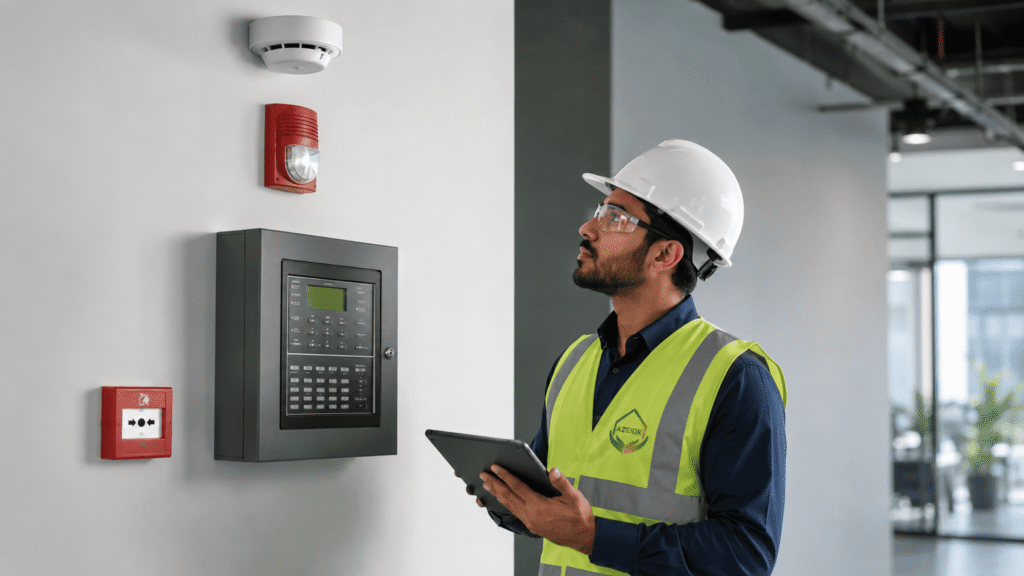
A practical guide explaining the difference between conventional and addressable fire alarm systems, when to choose each option, and how to review project type, Civil Defense requirements, maintenance, and inspection readiness.