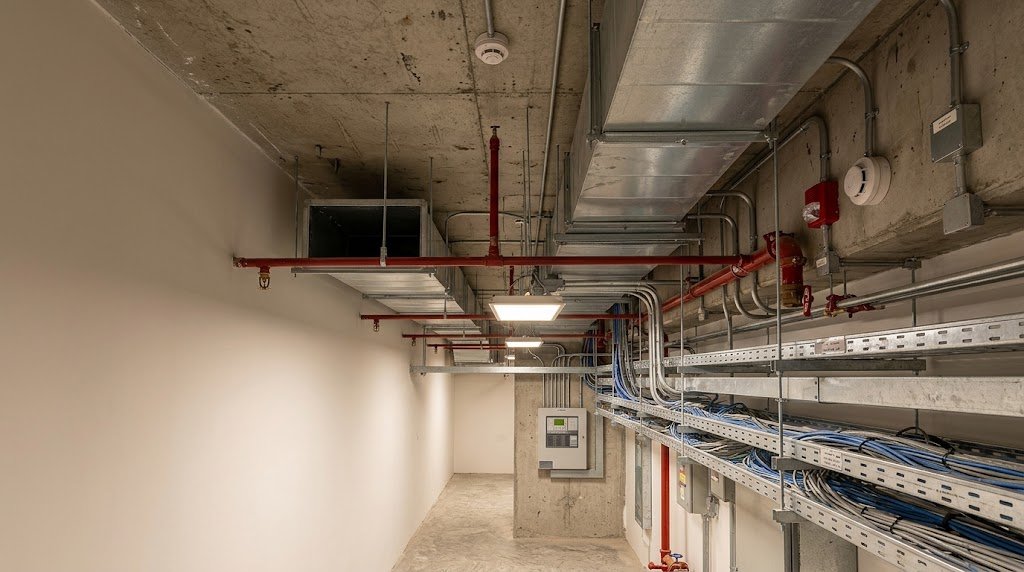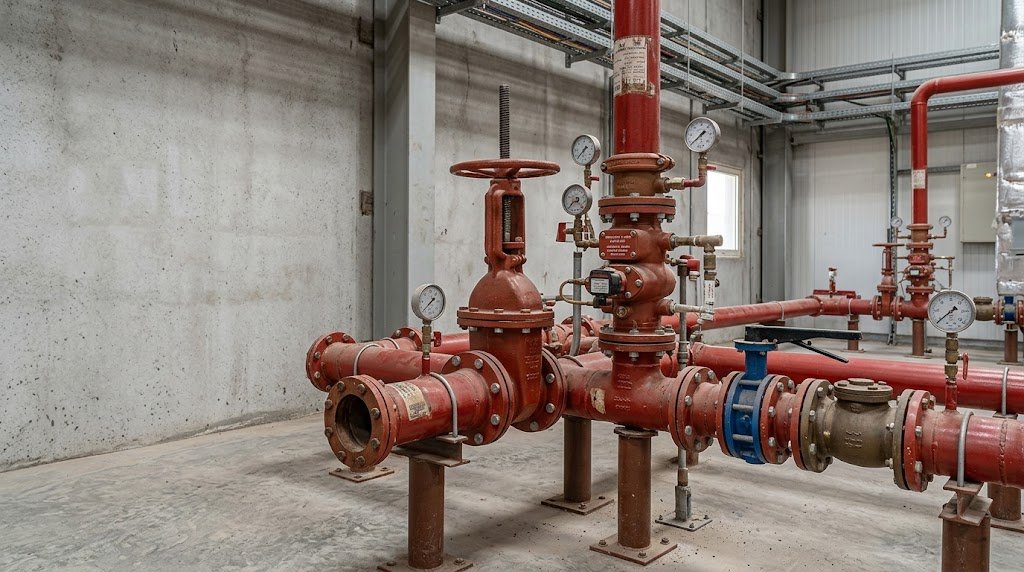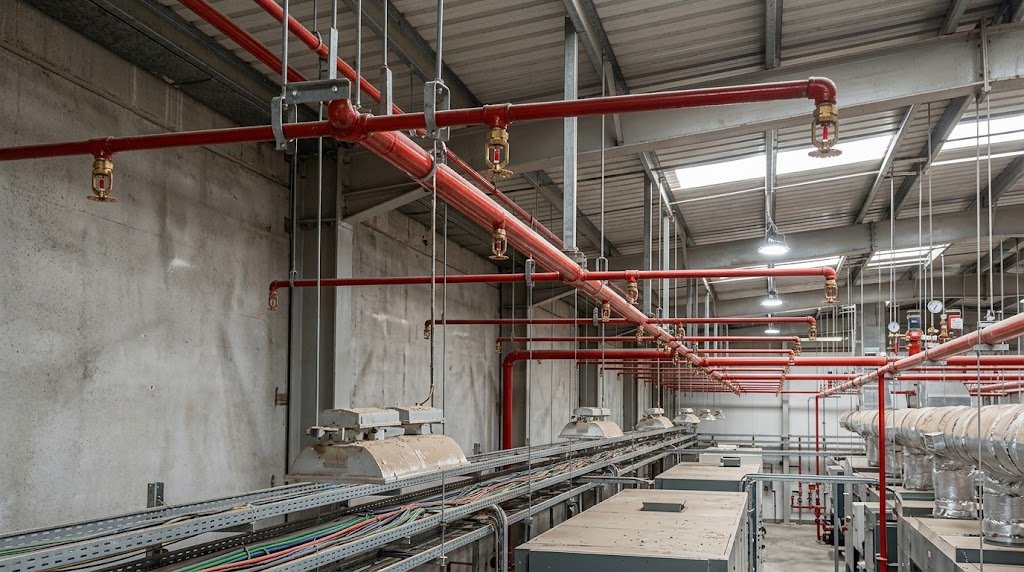
Fire protection valves and network components are essential parts of any water-based fire fighting system. They control water flow, isolate system zones, support testing, protect equipment, monitor system conditions, and help maintenance teams keep the fire protection network ready for operation.
A fire fighting system is not only pipes and pumps. Valves, gauges, switches, couplings, fittings, drains, test points, risers, and control assemblies all affect system performance. If these components are selected incorrectly, installed poorly, or not maintained properly, the entire fire fighting network may become difficult to operate, inspect, or rely on during emergency conditions.
- 01 - What are fire protection valves and network components?
- 02 - Why valves are critical in fire fighting systems
- 03 - Main types of fire protection valves
- 04 - Control valves and isolation functions
- 05 - Check valves and backflow control
- 06 - Alarm check valves and sprinkler riser assemblies
- 07 - Flow switches, supervisory switches, and monitoring
- 08 - Fittings, couplings, gauges, drains, and test points
- 09 - How to select the right valve or component
- 10 - Installation and coordination requirements
- 11 - Inspection, testing, and maintenance
- 12 - Common mistakes in valve and network component projects
- 13 - Azeidk’s role in fire protection valves and components
- 14 - Checklist before approving valves and components
What are fire protection valves and network components?
Fire protection valves and network components are the mechanical and monitoring elements used inside fire fighting systems to control, direct, isolate, test, drain, monitor, and maintain water flow across the network.
These components are used in sprinkler systems, fire hose reel systems, hydrant networks, fire pump rooms, riser systems, zone control assemblies, deluge systems, and other water-based fire protection applications.
Important point
Valves and components may look like small parts compared to pumps or pipes, but they are critical to system control, testing, isolation, maintenance, and emergency readiness.
Why valves are critical in fire fighting systems
Fire fighting networks must deliver water to the correct area at the required pressure and flow. Valves and components help control how the system operates, which zones are active, how water is tested, and how faults or maintenance works are managed.
A closed valve, wrong valve type, missing supervisory switch, damaged check valve, incorrect gauge, or inaccessible test point can affect system reliability. This is why valves and components must be selected and installed with the same seriousness as major equipment.
Fire protection valves help support:
- Water flow control inside the fire fighting network.
- Isolation of zones during maintenance or repair.
- Prevention of unwanted reverse flow.
- Testing and commissioning of system sections.
- Monitoring of valve position and water flow.
- Drainage and pressure checking.
- Safe operation and long-term maintenance readiness.
Main types of fire protection valves
Fire protection systems use different valve types depending on the application, system design, pressure rating, pipe size, installation location, monitoring requirement, and project specification.
Common valve types
- Gate valves.
- OS&Y gate valves.
- Butterfly valves.
- Check valves.
- Alarm check valves.
- Pressure reducing valves.
- Pressure relief valves.
- Drain valves.
- Test valves.
- Control valves for risers and zones.
Each valve has a specific function. Selecting the wrong valve type can affect flow, inspection, monitoring, testing, isolation, or maintenance.
Control valves and isolation functions
Control valves are used to open, close, or isolate sections of a fire fighting system. They are commonly installed on main lines, risers, sprinkler zones, fire pump connections, hose reel networks, hydrant systems, and equipment branches.
The ability to isolate a section is important during maintenance, repair, testing, or system modification. However, control valves must be managed carefully because a closed valve in the wrong condition can prevent water from reaching the protected area.
Control valve considerations
- Valve type and size should match the system design.
- The valve should be accessible for operation and inspection.
- Open or closed status should be clear.
- Supervisory monitoring may be required depending on the project.
- Valve location should support maintenance without disabling unnecessary areas.
- Labels or identification should be clear for facility teams.
Check valves and backflow control
Check valves allow water to flow in one direction and help prevent reverse flow. They are commonly used in fire pump discharge lines, sprinkler risers, zone assemblies, and selected fire fighting network arrangements.
A faulty or incorrectly installed check valve may cause pressure issues, water hammer, reverse flow, pump cycling, leakage, or operational problems. The valve direction, size, pressure rating, and installation orientation must be reviewed carefully.
What to check in check valves
- Correct flow direction.
- Suitable pressure rating.
- Correct size and connection type.
- Accessibility for inspection and maintenance.
- Compatibility with pump discharge or riser arrangement.
- Condition of internal components during maintenance.
Alarm check valves and sprinkler riser assemblies
Alarm check valves are commonly used in wet sprinkler systems and riser arrangements. Their purpose is to allow water flow into the sprinkler system and help activate alarm or monitoring functions when water flows due to sprinkler operation or testing.
A sprinkler riser assembly may include an alarm check valve, control valve, gauges, drain connection, test connection, flow switch, supervisory switch, and related fittings. The arrangement must be installed clearly and kept accessible for inspection and testing.
Riser assembly components may include:
- Alarm check valve.
- Main control valve.
- Pressure gauges.
- Drain line.
- Inspector test connection.
- Flow switch.
- Supervisory switch.
- Bypass or trim components depending on system design.
Incorrect riser arrangement can make the system difficult to test, drain, monitor, or maintain.
Flow switches, supervisory switches, and monitoring
Monitoring components help facility teams and control systems know what is happening inside the fire protection network. Flow switches can indicate water movement, while supervisory switches can monitor control valve position.
These components may be connected to the fire alarm system, control room, or monitoring system according to project requirements. Correct installation and testing are important because false signals, missing signals, or wrong wiring can create operational confusion.
Monitoring components help identify:
- Water flow inside the sprinkler or fire fighting network.
- Open or closed status of selected control valves.
- System abnormal conditions where monitored.
- Signals required for fire alarm or BMS interfaces.
- Testing and maintenance status when properly documented.
Monitoring should not be treated as an accessory only. In many projects, it is part of the system’s ability to communicate faults, flow conditions, or valve status.
Fittings, couplings, gauges, drains, and test points
Fire fighting networks also depend on fittings and accessories that support the complete system. These include grooved couplings, elbows, tees, flanges, unions, pressure gauges, drain valves, test points, flexible connections, pipe supports, and related components.
Important network components
- Grooved couplings and fittings.
- Flanges and connection accessories.
- Elbows, tees, reducers, and branch connections.
- Pressure gauges and gauge valves.
- Main drains and auxiliary drains.
- Inspector test connections.
- Pipe supports and hangers.
- Flexible connectors where required.
- Test headers and flow testing components.
These components may appear simple, but they influence installation quality, testing access, leakage control, maintenance, and long-term system reliability.
How to select the right valve or component
Valve and component selection should be based on the project specification, system type, operating pressure, pipe size, connection method, approval requirement, installation location, and maintenance access.
Selection factors
- System type and application.
- Required size and pressure rating.
- Connection type such as flanged, threaded, or grooved.
- Material suitability and corrosion considerations.
- Required approvals and certificates.
- Compatibility with pipes, pumps, risers, and sprinkler systems.
- Accessibility for operation, inspection, and maintenance.
- Monitoring requirements for valve status or water flow.
- Spare parts and long-term availability.
A valve should not be selected only because it is available in stock. It must be suitable for the required function, pressure, connection, approval level, and installation condition.
Installation and coordination requirements
Correct installation is essential for fire protection valves and network components. Poor installation can cause leakage, pressure loss, difficult maintenance, wrong flow direction, inaccessible components, or failed testing.
Installation coordination should cover:
- Correct valve orientation and flow direction.
- Accessible locations for operation and inspection.
- Clear space around valves, gauges, and switches.
- Proper pipe support before and after heavy components.
- Correct installation of flow switches and supervisory switches.
- Drainage and test point accessibility.
- Coordination with walls, ceilings, equipment, and other MEP services.
- Clear labeling and identification for facility teams.
- Protection from damage during construction or operation.
A well-installed valve assembly should be easy to inspect, operate, test, and maintain. If a component is hidden, blocked, mislabeled, or installed in the wrong direction, it can create serious problems later.
Inspection, testing, and maintenance
Fire protection valves and components must remain in the correct condition after handover. Over time, valves may be closed accidentally, gauges may become damaged, switches may fail, seals may leak, or drains and test points may become difficult to access.
Maintenance should include:
- Checking valve open or closed status.
- Inspecting valve accessibility and identification.
- Testing flow switches and supervisory switches where connected.
- Checking pressure gauges and gauge valves.
- Inspecting check valves and control assemblies where required.
- Reviewing drain and test point condition.
- Checking for leakage, corrosion, damage, or loose supports.
- Confirming that labels and tags are still clear.
- Recording inspection results and corrective actions.
Maintenance records are important because they show whether the fire protection network is being kept ready, not only whether it was installed correctly at the beginning.
Common mistakes in valve and network component projects
Many fire fighting network problems happen because valves and components are treated as small accessories, while in reality they control important system functions.
- Choosing valves without checking pressure rating or approval requirements.
- Using the wrong valve type for the required function.
- Installing check valves in the wrong direction.
- Placing control valves in inaccessible locations.
- Not monitoring valves that require supervision.
- Installing flow switches without proper testing or coordination.
- Missing drain points or inspector test connections.
- Using weak pipe supports around heavy valves or assemblies.
- Submitting incomplete datasheets or certificates.
- Not labeling valves and zones clearly for maintenance teams.
- Ignoring maintenance access after ceiling or wall closing.
Practical warning
A closed valve, wrong check valve direction, missing test point, or inaccessible control assembly can reduce the reliability of the whole fire fighting network.
Azeidk’s role in fire protection valves and components
Azeidk supports fire fighting projects by helping clients select suitable valves, fittings, gauges, switches, couplings, and related network components according to project requirements. The goal is to make sure each component matches the system function, pressure, application, approval requirement, installation condition, and maintenance need.
Fire protection valves and components are part of a wider system that may include fire pumps, sprinkler networks, hose reels, hydrants, fire alarm monitoring, testing, commissioning, and maintenance. Azeidk helps clients approach these components as part of a complete fire protection network.
How Azeidk supports clients
- Reviewing project specifications and component requirements.
- Supporting selection of suitable valves and network components.
- Providing datasheets, certificates, and technical documentation where required.
- Supporting supply of valves, fittings, gauges, switches, and related accessories.
- Helping coordinate installation with fire pumps, risers, sprinkler systems, and MEP services.
- Supporting testing, commissioning, inspection, and maintenance needs.
- Helping clients avoid mismatched or unsupported components.
The objective is not only to supply individual components, but to support a complete fire fighting network that can be inspected, tested, maintained, and kept ready for long-term operation.
Checklist before approving valves and components
- The system type and component function have been clearly identified.
- Valve type, size, pressure rating, and connection method are suitable.
- Required approvals and certificates have been reviewed.
- Datasheets match the exact product being supplied.
- Flow direction and installation orientation are clear.
- Control valves are accessible and identifiable.
- Flow switches and supervisory switches are coordinated with monitoring requirements.
- Drain points and test connections are included where required.
- Pipe supports and access for maintenance have been reviewed.
- Labels, testing records, and maintenance requirements are prepared.
In the end, fire protection valves and network components are not minor details. They are essential parts of how a fire fighting system operates, isolates, tests, monitors, and remains ready. With Azeidk, clients can manage valve and component selection as part of a complete fire protection strategy, from technical review and supply to installation support, testing, maintenance, and long-term readiness.