Choosing the best UL/FM fire pump brand in Saudi Arabia is not only about selecting a well-known manufacturer. A reliable fire pump solution must match the project hydraulic demand, approval requirements, pump configuration, controller specifications, documentation needs, installation conditions, and long-term maintenance support.
In many fire protection projects, UL Listed and FM Approved fire pumps are requested by consultants, clients, insurers, or project specifications. But the approval mark alone is not enough. The selected fire pump package must be technically suitable for the actual building, facility, water supply, system demand, and operating conditions.
- 01 - Why UL/FM fire pump selection matters
- 02 - What UL Listed and FM Approved mean for fire pumps
- 03 - How to evaluate fire pump brands
- 04 - How to evaluate the fire pump supplier
- 05 - Pump performance curves and hydraulic suitability
- 06 - Complete fire pump package components
- 07 - Documents required before approval
- 08 - Installation and pump room coordination
- 09 - Spare parts, testing, and maintenance support
- 10 - Common mistakes when choosing UL/FM fire pumps
- 11 - Azeidk’s role in UL/FM fire pump projects
- 12 - Checklist before selecting a UL/FM fire pump supplier
Why UL/FM fire pump selection matters
Fire pumps are central to the performance of water-based fire fighting systems. They support sprinkler systems, hose reels, hydrants, standpipes, deluge systems, and other fire protection networks by delivering water at the required pressure and flow.
When a project requires UL/FM fire pumps, the decision becomes more sensitive. The selected pump package must satisfy technical performance, approval requirements, consultant review, project documentation, testing, and long-term service expectations.
Important point
The best UL/FM fire pump brand is not only the brand with a certificate. It is the complete pump solution that matches the required flow, head, configuration, approval scope, controller requirements, and maintenance needs of the project.
What UL Listed and FM Approved mean for fire pumps
UL Listed and FM Approved are common approval references in fire protection projects. For fire pumps, these approvals are usually reviewed to confirm that the pump, controller, driver, and related configuration are suitable for the specified fire protection application.
However, the approval must be checked carefully. A manufacturer may have approved pump models, but not every pump size, driver, controller, or configuration may be covered in the same way. The project team should review the exact model, capacity, head, speed, driver type, controller details, and approval documents before submission.
What should be checked?
- Manufacturer name and approved model.
- Required flow rate and total head.
- Electric or diesel driver configuration.
- Fire pump controller approval and compatibility.
- Pump curve and rated duty point.
- Approved size, speed, and arrangement.
- Accessories and package components where required.
- Any limitations or conditions in the approval documents.
How to evaluate fire pump brands
A strong fire pump brand should provide reliable performance, clear technical documents, suitable approvals, consistent manufacturing quality, and long-term product support. The brand should also offer pump configurations that match different project demands, from commercial buildings to factories, warehouses, hospitals, hotels, malls, and industrial facilities.
Brand evaluation criteria
- Availability of UL Listed and FM Approved models when required.
- Clear pump performance curves.
- Suitable pump types for different project applications.
- Reliable fire pump controllers and drivers.
- Compatibility between pump, controller, engine, and accessories.
- Technical documentation and submittal support.
- Manufacturing consistency and quality control.
- Spare parts and service support.
- Ability to support future maintenance and replacement needs.
A well-known brand can still be unsuitable if the selected model does not match the project duty point, approval requirement, site condition, or maintenance expectation.
How to evaluate the fire pump supplier
In fire pump projects, the supplier is as important as the brand. A good supplier does not simply provide a quotation. It helps the client review the required flow and head, select the correct configuration, prepare documents, coordinate delivery, support installation, and assist during testing and commissioning.
Supplier evaluation criteria
- Understanding of fire pump selection and project requirements.
- Ability to read specifications and hydraulic requirements.
- Clear communication about inclusions and exclusions.
- Availability of technical documents and approval certificates.
- Support during consultant comments and material approval.
- Ability to coordinate with installation and MEP teams.
- Testing, commissioning, and troubleshooting support.
- Spare parts, service, and maintenance capability after delivery.
A weak supplier may create approval delays, missing documents, wrong configurations, unclear responsibilities, or poor after-sales support, even when the pump brand itself is strong.
Pump performance curves and hydraulic suitability
Fire pump selection must be based on hydraulic performance, not only horsepower or pump size. The pump curve shows how the pump performs at different flow rates and pressures. It helps the project team confirm that the selected pump can meet the required duty point and operate within acceptable performance limits.
The project team should compare the pump curve with the required design flow, total head, system demand, elevation, friction losses, and pressure requirements. If this step is skipped, the selected pump may fail to meet the actual project need.
Performance review should include:
- Rated flow and rated pressure.
- Total head at the required duty point.
- Churn pressure and maximum pressure considerations.
- Performance at higher flow points where applicable.
- Motor or engine capacity.
- NPSH and suction condition considerations where applicable.
- Compatibility with the fire fighting network.
- Controller and driver suitability.
Complete fire pump package components
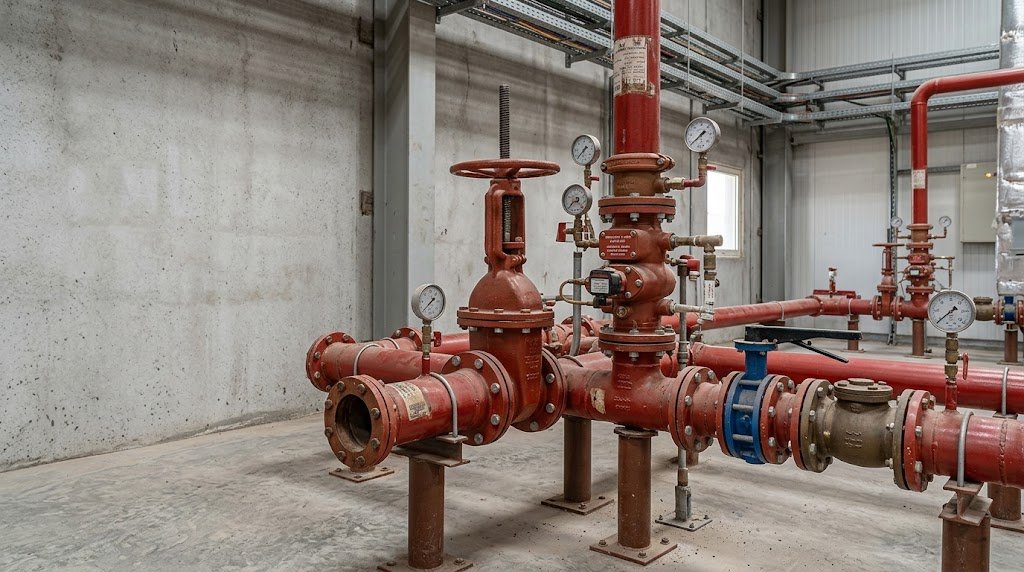
A UL/FM fire pump project should be reviewed as a complete package. The pump alone is not the full system. Controllers, drivers, valves, gauges, batteries, test arrangement, sensing lines, base frame, accessories, and documentation all affect the final performance and approval process.
Common package components
- Electric fire pump or diesel fire pump.
- Jockey pump for pressure maintenance.
- UL/FM fire pump controllers where required.
- Diesel engine, fuel system, batteries, and charger where applicable.
- Suction and discharge piping connections.
- Check valves, gate valves, butterfly valves, and control valves.
- Pressure gauges and sensing lines.
- Relief valves, drains, and test connections where required.
- Test header or flow testing arrangement.
- Base frame, coupling, guard, and alignment accessories.
- Monitoring signals and interface points where required.
Before approval, the full package should be reviewed against the project specification. A missing component or wrong accessory may affect installation, testing, or consultant approval.
Documents required before approval
Fire pump submittals should be clear, complete, and consistent. The documents must show that the proposed pump package matches the project requirement and that all major components are properly identified.
Important documents
- Technical datasheets for pumps.
- Fire pump performance curves.
- UL Listing and FM Approval documents where required.
- Fire pump controller datasheets and approval documents.
- Diesel engine datasheets where applicable.
- Jockey pump datasheet.
- Bill of materials for the full package.
- General arrangement drawings.
- Installation, operation, and maintenance manuals.
- Testing and commissioning procedures.
- Warranty and service support information.
Inconsistent submittals are a common reason for consultant comments. The pump datasheet, curve, certificate, quotation, and bill of materials should all refer to the same equipment and configuration.
Installation and pump room coordination
A UL/FM fire pump package can lose much of its value if installed incorrectly. The pump room must allow correct mechanical installation, safe electrical connection, controller access, testing, drainage, ventilation, exhaust arrangement for diesel pumps, and future maintenance.
Installation coordination should cover:
- Pump room layout and maintenance clearance.
- Suction and discharge pipe routing.
- Valve arrangement and accessibility.
- Controller location and electrical protection.
- Diesel ventilation, fuel, exhaust, and battery access where applicable.
- Drainage for testing and maintenance.
- Test header or flow testing arrangement.
- Pipe supports, vibration considerations, and alignment.
- Safe access for inspection and service teams.
Early coordination between fire fighting, electrical, civil, and MEP teams helps prevent costly rework and makes the system easier to test and maintain after handover.
Spare parts, testing, and maintenance support
Fire pumps may remain idle for long periods, but they must be ready immediately when required. This makes testing and maintenance a major part of the fire pump decision. The selected brand and supplier should support long-term readiness, not only initial delivery.
Maintenance support should include:
- Availability of critical spare parts.
- Support for pump controllers and electrical components.
- Diesel engine support where applicable.
- Testing and commissioning assistance.
- Periodic inspection and preventive maintenance.
- Troubleshooting for pressure, startup, or controller issues.
- Clear maintenance manuals and service procedures.
- Replacement support for future upgrades or damaged components.
A pump package without reliable service support can create serious problems after handover. Long-term maintenance should be considered before finalizing the brand or supplier.
Common mistakes when choosing UL/FM fire pumps
Many fire pump issues begin during selection and submittal stage. If the project team focuses only on the brand name or price, important technical details may be missed.
- Choosing a pump brand without checking the exact approved model.
- Selecting the pump by horsepower instead of flow and head.
- Ignoring the pump curve and actual duty point.
- Submitting approval documents that do not match the supplied configuration.
- Assuming the controller is approved because the pump is approved.
- Ignoring diesel engine, battery, fuel, ventilation, and exhaust requirements.
- Not checking pump room layout and maintenance clearance.
- Forgetting test header, drainage, sensing lines, or monitoring points.
- Choosing a supplier with weak after-sales or spare parts support.
- Waiting until testing stage to discover selection or installation problems.
Practical warning
A UL/FM fire pump selection is not complete until the pump, controller, driver, accessories, approval documents, installation conditions, and maintenance support are all reviewed together.
Azeidk’s role in UL/FM fire pump projects
Azeidk supports clients in fire pump projects by helping them review requirements, select suitable pump packages, prepare technical documents, coordinate supply and installation, support testing and commissioning, and maintain pump readiness after handover.
Fire pump projects require careful coordination between the pump supplier, fire fighting contractor, electrical team, civil team, consultant, and facility operator. Azeidk helps clients approach fire pumps as complete technical systems, not only as equipment items.
How Azeidk supports clients
- Reviewing project specifications and required approvals.
- Supporting selection of suitable UL/FM fire pump packages where required.
- Providing technical datasheets, curves, and submittal documents.
- Supporting supply of pumps, controllers, valves, and accessories.
- Coordinating installation requirements and pump room readiness.
- Supporting testing, commissioning, and troubleshooting.
- Providing maintenance and after-sales support for long-term readiness.
The goal is to help clients choose fire pump solutions that are technically suitable, properly documented, reliable in operation, and supportable throughout the project life cycle.
Checklist before selecting a UL/FM fire pump supplier
- The project specification and required approval level have been reviewed.
- The required flow and head are confirmed by hydraulic design.
- The selected pump model is covered by the required approval documents.
- The pump curve matches the project duty point.
- The controller, driver, and accessories are compatible with the pump package.
- Electric, diesel, and jockey pump configuration is clearly defined.
- Submittal documents are complete and consistent.
- Pump room layout, access, drainage, ventilation, and testing arrangement are reviewed.
- Spare parts and after-sales support are confirmed.
- The supplier can support testing, commissioning, and maintenance after handover.
In the end, choosing the best UL/FM fire pump brand in Saudi Arabia requires more than comparing names. The correct decision depends on approvals, hydraulic performance, pump configuration, documentation quality, supplier reliability, installation coordination, spare parts availability, and long-term technical support. With Azeidk, clients can manage UL/FM fire pump selection as a complete technical process from review and supply to installation, testing, and maintenance.